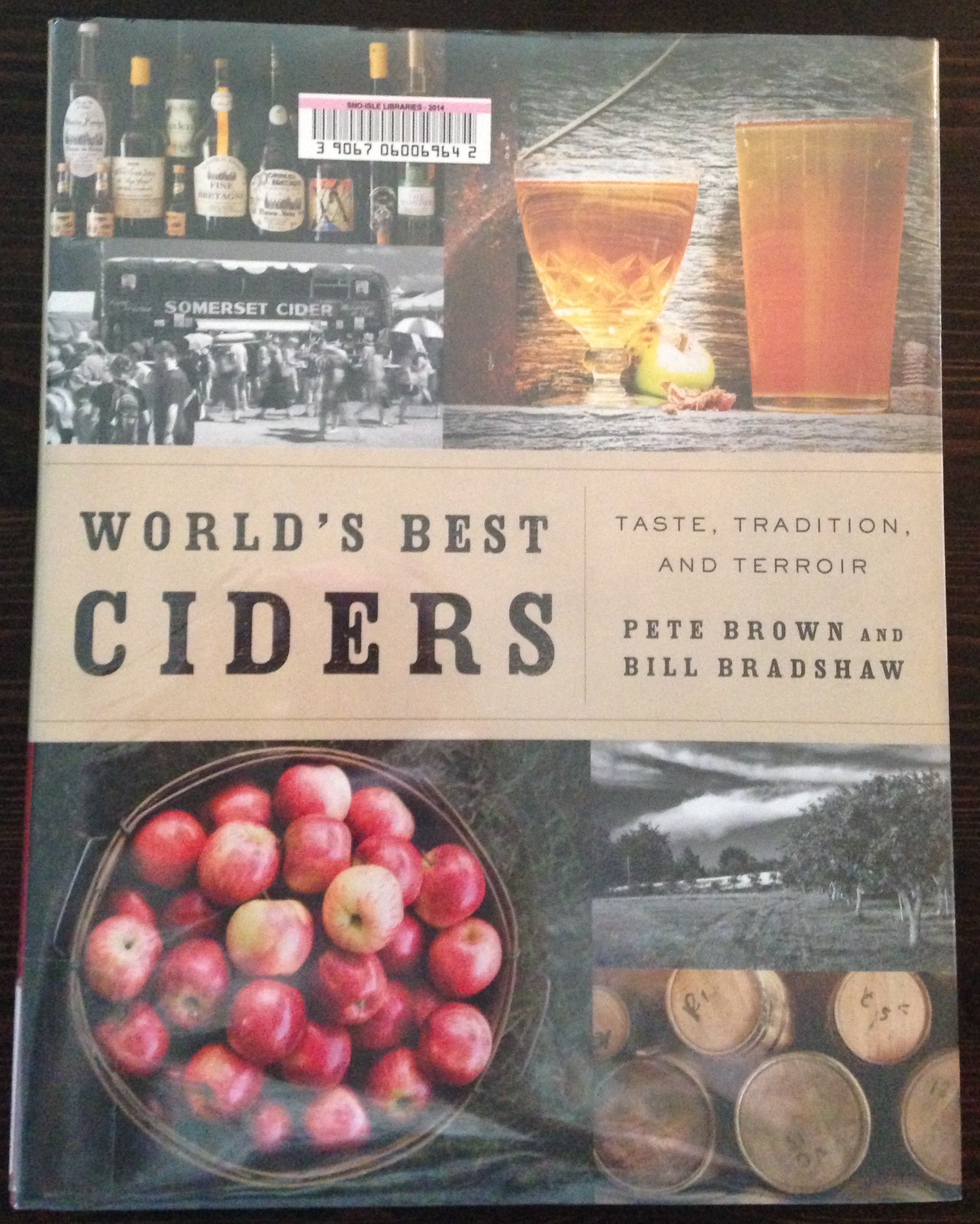
Book Review #4, World’s Best Ciders – Taste, Tradition, and Terroir

Part four of four of reviews of cider-related books I obtained from my local library.  Here are links to part 1part 2, and part 3.  This time the book is World’s Best Ciders – Taste, Tradition, and Terroir (Pete Brown & Bill Bradshaw, hardcover, published 2013).  Its is available on Amazon for $17.56 (a great deal compared to the $30 list price on the book).  The pair is also coming out with a film about cider (The Cider Hunters)!  Check out the trailer here and follow the page on Facebook here.

This book is much more cider enthusiast (vs. cidermaking) friendly than the previous three books.  I enjoyed it so much that I bought a copy, which says a lot as I haven’t bought a book in years!  Its a great coffee table book about cider with lovely photos & graphics.  There are lots of cider recommendations and information indexed by region.  This is truly a world guide in cider!  It also has a very well-written introduction with some basic information about cider, its history, styles, flavors, tasting, etc.

I was even lucky enough to attend Capitol Cider’s meet & greet, book signing, and tasting with co-author Bill Bradshaw last night!  We’re lucky to have him in Seattle for Cider Summit as he resides in the UK.  (a post on that event is in work)

world's best ciders

Chapters:

Introduction

Cider Basics
History of Cider
Apples, Orchards, and the Cider Year
How CIder is Made
Cider Flavors
Commercial Brands
Profile: Peter Mitchell
Perry
Tasting Cider
Tasting Symbols

Planet Cider
A World of Cider
(each of these subchapters has an introduction, profiles, styles, cider suggestions, etc)

Europe
Spain
France
Germany
Austria
United Kingdom
Ireland
Rest of Europe

The Americas
United States
Canada
Argentina and Chile

Australia and New Zealand

Rest of World
South Africa

Cider and Food

Some Great Excerpts:

  • First sentence of the book:  Cider is the world’s most misunderstood drink.
  • Cider takes us back to an earlier, simpler time.  It reconnects us with the land and the cycle of the seasons.  And maybe, in an increasingly virtual, synthetic, and prepackaged age, that’s why cider’s popularity is blooming around the world.
  • We do not claim that the 244 ciders in this book are definitely the best 244 in the world, but that they are 244 of the best.  Every cider in this book is one that we’ve enjoyed and one we think worth trying.  Still, everyone’s palate is different.
  • It is one of the fastest growing drinks in the world, sweeter than beer, less potent than wine, simple and yet capable of complex greatness.  Welcome to the cider revolution.
  • Those who don’t know cider can have a snide attitude if the word terroir is used in conjunction with it.  Social conditioning tells us that this is a concept exclusive to the sophistication and subtlety of wine.  But if we accept that climate (or microclimate), temperature, and soil can have a profound effect on one particular fruit–which we do, because it is true–then logically it would be bizarre to suggest it has no such effect on other fruit.
  • When we began writing this book, a leading drinks writer said to us, “Interesting, but what can you write about cider?  It tastes like apples.  What else is there to say?”
  • Some of us have far higher concentrations of taste buds than others, which creates dramatically different perceptions of flavor.  There’s also an emerging body of research that seems to prove that taste cannot be separated from other stimuli and that context, environment, mood, and memory all make something “taste” different.
  • Drink straight from the bottle and you’re cutting your nose–and about 80 percent of the flavor compounds–out of the equation.

In closing, this book comes highly recommended!  Its a great addition to our living room and a conversation starter.  For me this isn’t so much a book that you read cover to cover, but one that you pick up from time to time and leaf through a section, such as when a particular cider region strikes your fancy.  Its also a great introduction to cider to share with our houseguests before/during/after we have a cider tasting (as always happens in our house as few folks are familiar with good craft cider).

East Meets West: An Evening with Eden and Alpenfire Ciders at Burgundian Bar

Stop 2 on Thursday night brought me to the Burgundian bar in Seattle.  Cidermakers from Eden Ice Cider (Newport VT) and Alpenfire Organic Hard Cider (Port Townsend WA) were on hand to chat, they were pouring ciders from each, and there were even specialty cocktails using their ciders.  It started off very slow at 5pm, but that worked very well for me as I got some awesome conversations in while there were more industry folks than customers.  I met Kyle from Millstone Cellars (Monkton MD); I had e-mailed with him about their Cobbler cider and he remembered me.  I also met Dan from Orcas Distributing, which is one of the main cider distributors in the Seattle area.  I got to see both again the next day at Cider Summit.

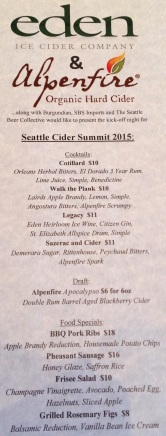
The special event menu is below (click to biggify).  They also had a number of bottle pour ciders from Eden, Alpenfire, and more.  There was unfortunately only one draft cider as they apparently had some logistical issues.
2015-09-10 17.23.09

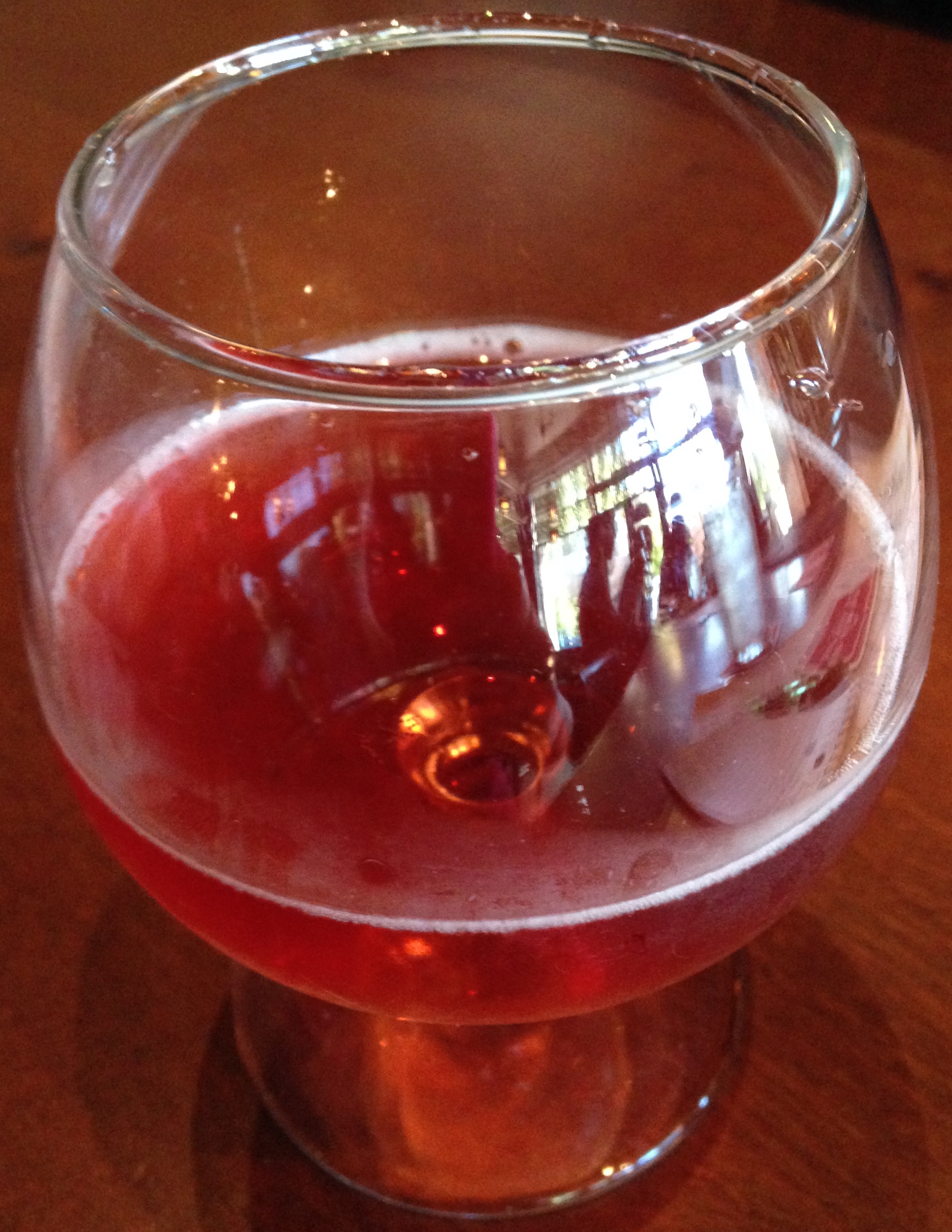
I started with a glass of Alpenfire Apocalypso, a double rum barrel aged blackberry cider.  This is their Calypso cider but rum barrel aged for four instead of two months.  This draft-only cider was $6 for 6oz (Calypso runs about $13 for a 500ml bottle).  6.9% ABV.  Middle of the road sweetness.  Berry with a touch of wood scent.  Lovely berry hue.  Fruity, moderately tart, with a hint of barrel influence.  Very tasty!  It had more complexity than your average fruity cider, which I really enjoyed.  There haven’t been too many fruity ciders I’ve been impressed with, but this is one.  Apocalypso is probably a tie with Spark! for my favorite Alpenfire cider so far.

2015-09-10 17.22.37

I chatted with Eleanor Leger from Eden Ice Cider for quite awhile.  it was awesome to learn more about Eden’s ciders, as I had seen them and was very interested, but hadn’t tried any yet.  Eden’s ciders are made by husband & wife team Eleanor & Albert Leger.  They specialize in and started with ice ciders, but have also branched out into aperitif and traditional ciders.  In addition to offering their customers more variety, both of these products are a way for them to use the same juice as their ice ciders, from a second and third pressing (the sugar content decreases).  They may actually be the only company selling cider apertifs at this time.  It was interesting to hear they are even trying to find uses for the “apple water” which is left after making the cider, such as selling it to a gin distillery which would use it in place of water for added flavor.

They were the first ice cider company in the U.S. and also have their own orchard of cider apples.  Ice cider by the way is a dessert wine variety which was developed in Canada, and is made from apples which have been concentrated by natural winter cold.  The apples are harvested at peak ripeness then kept in cold storage.  After pressing, the juice is set outdoors to freeze for 6-8 weeks, which results in a residual concentrate which is high in sugar and flavor.  The concentrate is then fermented, cold stabilized, filtered, and bottled, leaving a high alcohol and high residual sugar cider.  The final amount of cider is typically less than 1/4 of the original amount of juice pressed.  Eleanor told me approximately 20% of their juice is used for ice cider, 7% for apertif, 8% for cider, and the remaining 65% is “apple water”.

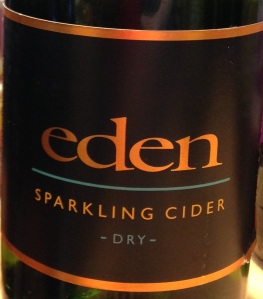
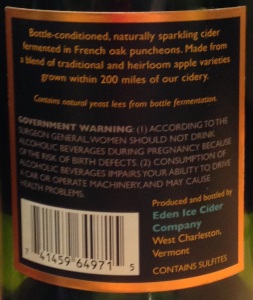
I then tried Eden’s Oak Aged Sparkling Dry Cider, 8.5% ABV, $9 for a 6oz bottle pour (runs around $10 for a 375ml bottle).  This is Eden’s first traditional cider (also available in Semi-Dry), released in 2013, and distribution was expanded outside of VT in 2014.  It is naturally sparkling from bottle conditioning using juice, not sugar (Methode Champenoise, which is VERY labor intensive; here is a great explaination).  This cider is crafted from traditional and heirloom apples (50% Kingston Black) grown within 200 miles of their cidery, aged in French oak puncheons (twice the size of typical barrels) for one year, then bottle conditioned for six months..  The purpose of the barrel aging in this case is to impart a more mature flavor, and it can actually increase the amount of tannins as well (vs. when a barrel from spirits is used it would also impart the flavor of the spirit, such as bourbon).
2015-09-11 12.36.32  2015-09-11 12.36.40
<disclaimer: these bottle label photos were taken at Whole Foods the following
day as I didn’t get a chance to ask the bartender to see the bottle>

Using such a large amount of Kingston Black apples is expensive, and Eleanor discussed the cost difference between using juice pressed from dessert apples ($2.50-4.00 / gallon) and juice pressed from cider apples ($8.00-10.00 / gallon) to make cider.  The high cost is primarily due to their rarity.  Hopefully in the coming years the cost will go down as availability increases, which will also increase the quality of ciders as more cidermakers use cider instead of dessert variety apples.  In addition to apples from Eden’s own orchard (which has about 1,000 trees and took approximately 5 years to go from planting to first harvest), they use a lot of apples from the nearby Scott Farm on Kipling’s estate, which is an old Macintosh orchard which was top grafted with many heirloom and cider apple varieties.  I also learned about Eden’s newest product addition, Imperial 11 Rose, which is an off-dry lightly sparkling 11% ABV cider made from heirloom apples and red currant.  Perfect for the wine-loving cider drinker.

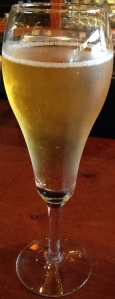
On to the Eden Sparkling Dry cider tasting notes:  Lovely brilliant amber with tiny bubbles and a light foam ring.  Definitely dry, but there was a touch of residual sweetness.  Ripe apple scent and taste.  Moderate amounts of acidity, tannins, and bitterness.  Mild tartness.  Medium bodied.  High carbonation.  Hints of earthiness and funk.  Very well crafted and balanced.  I could really taste the difference from using cider apples (vs. dessert apples) and bottle conditioning (vs. force carbonating).  A perfect cider alternative to champagne.  Yum!

It was a special treat to enjoy it while sitting and chatting with the cidermaker.  I typically have trouble tolerating both dryness and bitterness in a cider, but both were so well balanced with the acidity, tannins, and carbonation that I found the cider enjoyable.  I may have to pick up a bottle of this to have on hand; the small bottle size and reasonable cost (moreso per bottle not per ounce) are nice.
2015-09-10 17.54.29

I also met Nancy Bishop and her son Philippe from Alpenfire.  Ron from DrinkingCider.com and crew also showed up later!

Eleanor from Eden even brought some specialty ciders with her all the way from VT that aren’t available here in WA.  I had to leave before the event was over as I had work at 6am the next day (Friday) so I was unfortunately only able to taste one, dubbed “Cinderella’s Slipper”.  It was a very special variety that hasn’t been released.  It was their first cider made only from (35 varieties of) apples from Eden’s own orchard.  It had literally been forgotten about, sitting in a tank at Eden’s old facility for a year.  I found it to be dry, still, slightly tart, highly acidic, and high in tannins.  Very unique!

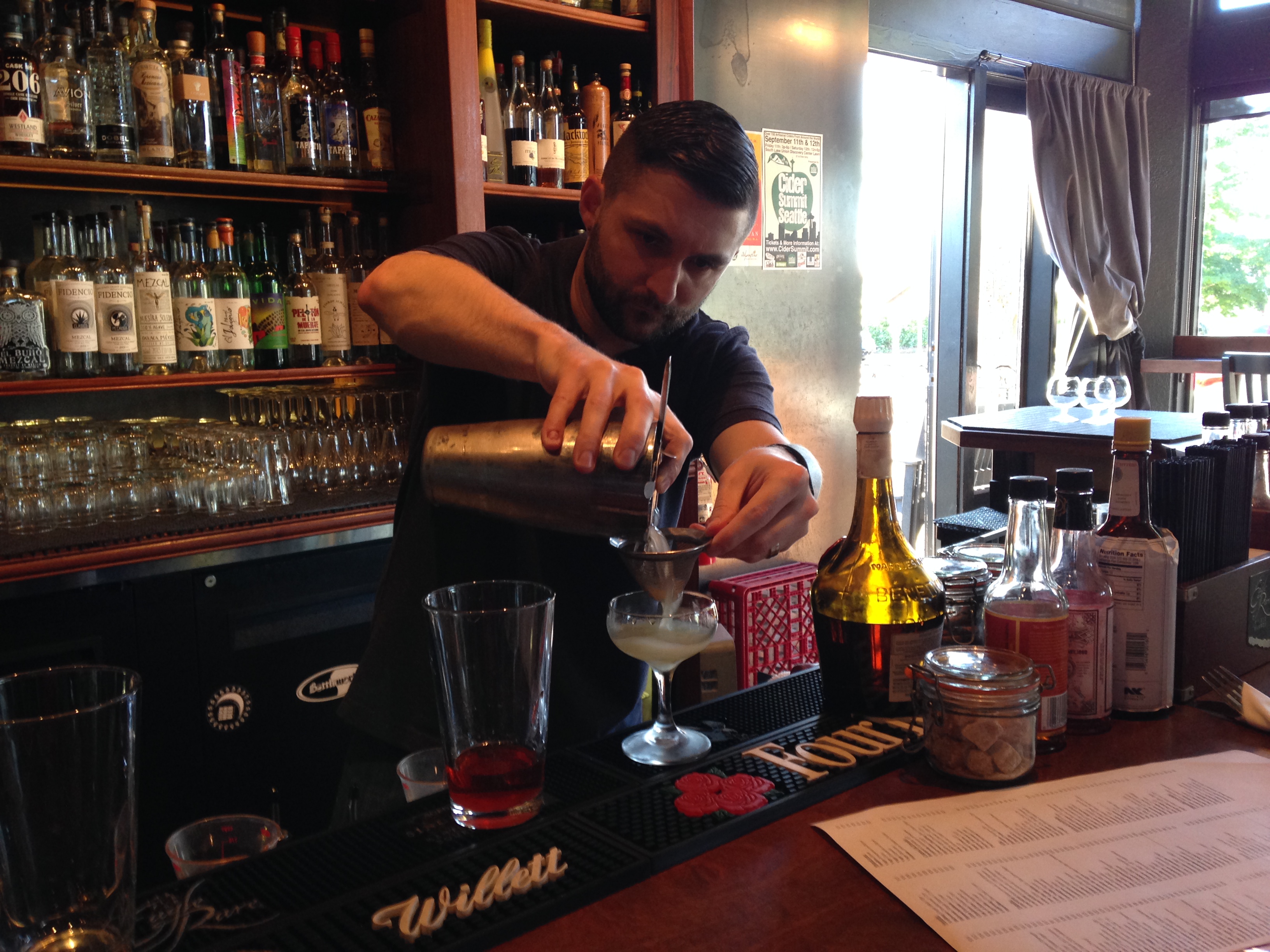
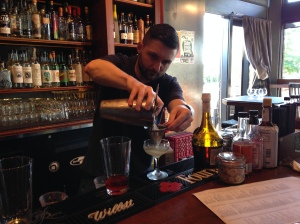
Here is a photo of the bartender at the Burgundian making one of the specialty cocktails by the way.  They were all very pretty and involved many interesting ingredients (time consuming for the bartender when Eleanor decided to try all four lol).  See the photo of the menu at the top of this post.
2015-09-10 17.33.36

However, I didn’t try any, as I am pretty picky when it comes to food & drink, especially cocktails (I don’t like gin or any aged spirits for example), and none of them sounded good to me.  Plus, I don’t really get the point of mixing high end cider into a cocktail; to me it would be like mixing expensive vodka with orange juice or whatever.  I’d rather drink the cider on its own and get the full experience of it!  I will admit I haven’t tried a cider cocktail though, and its something I want to do.

Cider cocktails seem all the rage lately around here, with Capitol Cider pouring them at Cider Summit, and Darlene Hayes even wrote a book all about them!  I was lucky enough to meet Darlene Hayes at Cider Summit and chat with her for a bit (she likes my blog by the way–very cool).  Check out her blog as well, All Into Cider, which has some great stories and information about cider.

Stay tuned for more Washington Cider Week posts at Cider Says.  Up next are posts about Cider Summit itself (including more tasting notes on Eden and Alpenfire ciders), then the Bill Bradshaw tasting event at Capitol Cider, and Schilling Cider House (2 Towns night but also hoping for some barrel aged ciders left from the night before).  I have quite a lot of photos and tasting notes to go through from Cider Summit though, so I apologize if there is a delay in the Cider Summit post/s.  To give a hint, I believe the final count is 33 ciders that I tried!  However, I have some other cider review posts to cue up in the meantime.  Cheers!

Washington Cider Week Kickoff at Seattle Cider

Thursday night was a great kickoff to Washington Cider Week!  I started the evening at Seattle Cider (opening ceremonies, although I left before that), then moved on to the Burgundian Bar (East Meets West, An Evening with Eden and Alpenfire Ciders).  This post will cover Seattle Cider and another will cover the Burgundian (plus many posts to come on Cider Summit and other Washington Cider Week events!).  I mostly chose to stop by Seattle Cider as it was a Washington Cider Week event to fill the time between when I got off work and the event at the Burgundian started at 5pm, as the events were located between work and home.  Plus I hadn’t ever been to their tasting room, The Woods (which they share with their sister brewery, 2 Beers Brewing Company).

seattle cider

Seattle Cider ended up a bit disappointing of a stop as they only opened at 3pm, and nothing was actually going on for the Washington Cider Week kickoff yet.  There were plenty of folks there though, lots of growler fills, etc.  They were only setting up while I was there, but they did however have 16 ciders on tap (6 of their own and 10 from 10 other cideries), some free cider swag, and a hot dog cart.  Also, I got to meet fellow cider blogger Ron from DrinkingCider.com!  He had reached out that he would be in town for Cider Summit, and I let him know my schedule.  We ended up meeting up at Seattle Cider, the Burgundian, and Cider Summit, which was pretty awesome.  He even brought me some cider from Tod Creek in Victoria BC which I look forward to trying; very cool.  Too bad he couldn’t take cider back to CT.

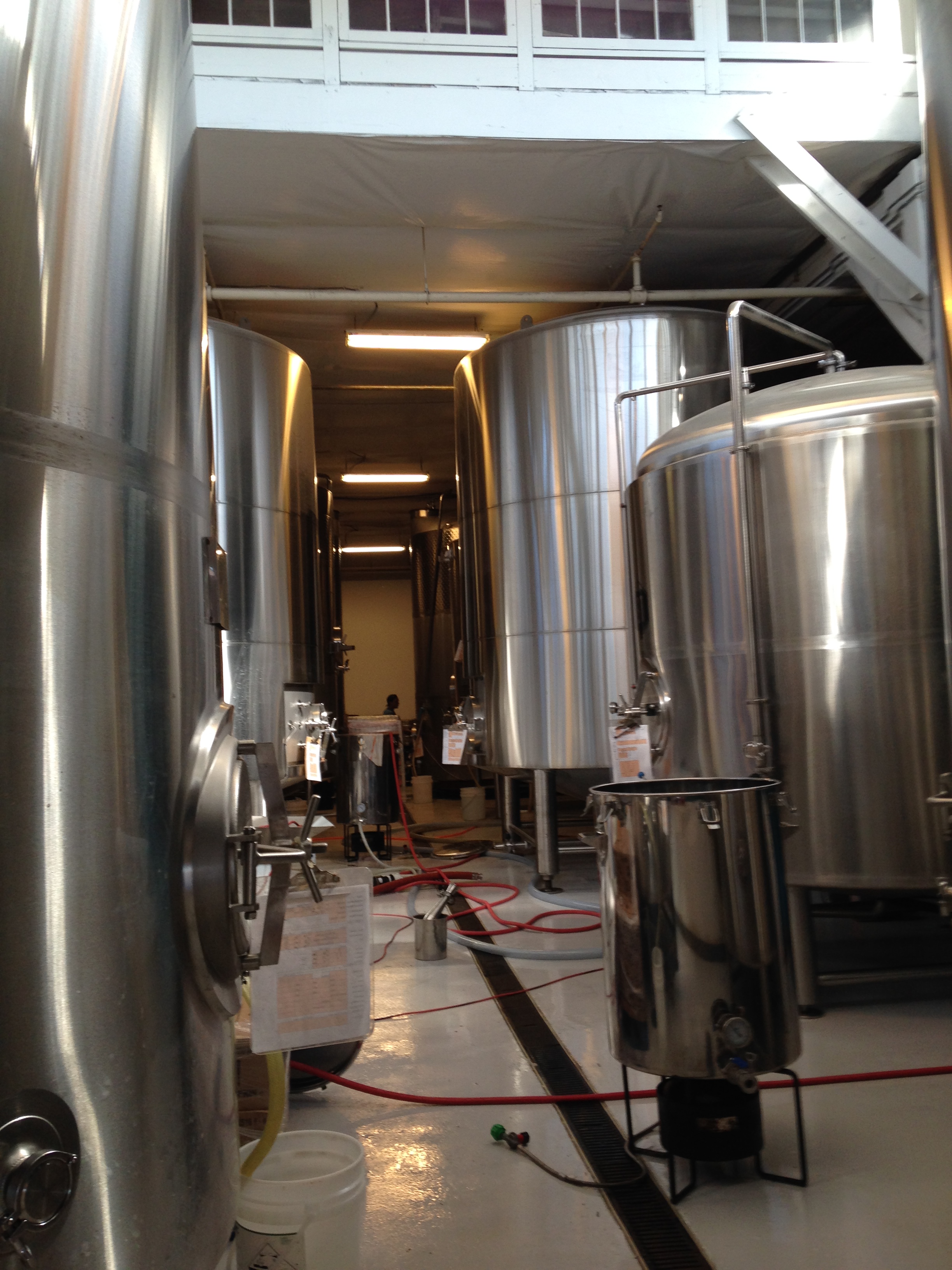
We even got a mini tour from their tasting room manager.  They were in production so we couldn’t walk through the cidermaking area (although they have an opening you can look through to see it), but we got to see a few areas.  I learned that Seattle Cider currently only uses apples from Washington (all dessert varieties except their Harvest series).  It was also interesting to hear about and see their current construction project, a kitchen!  Probably a very welcome addition…more tasting room need to offer food, even if its only chips, crackers, pretzels, whatever.

2015-09-10 15.26.48
<view of their outside seating area from inside>

2015-09-10 15.27.07
<malt sack light fixtures>

2015-09-10 15.28.07
<game area>

2015-09-10 15.28.12
<game area and view into barrel storage>

2015-09-10 15.29.34
<view of cidery tanks from the cutout inside the tasting room>
<their current largest is 280 gallons, but they plan to literally raise the roof to fit larger ones>

2015-09-10 15.25.29
<manager at the Woods (left) and Ron from DrinkingCider.com (right) in their storage area>
<yes, those are 2/4 palates I saw of cans of their Dry and Semi-Sweet>

2015-09-10 15.26.40
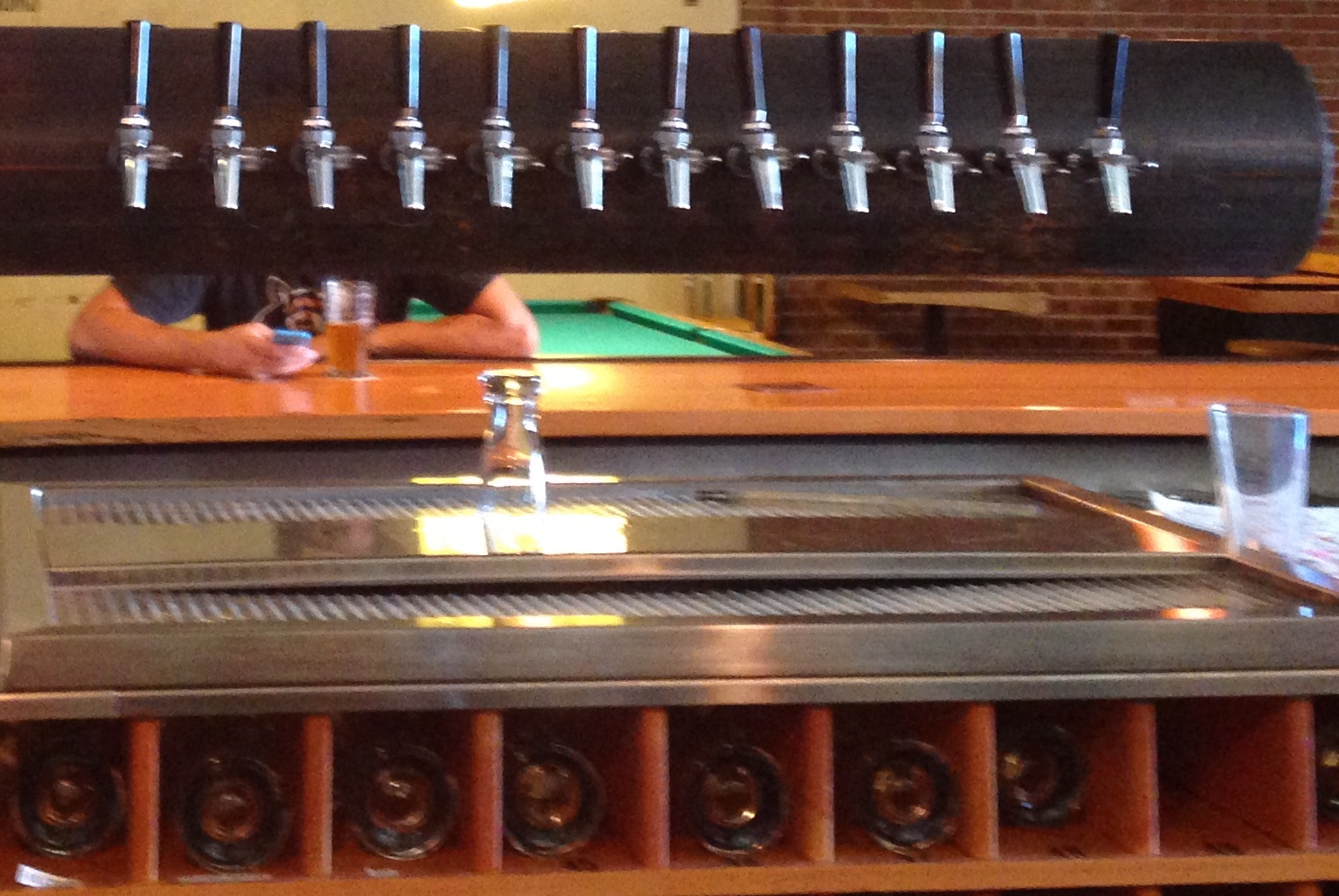
<taps, bar area, and fridges of canned/bottled beer/cider for purchase>

2015-09-10 15.31.20
<half of their taps>

2015-09-10 15.30.55
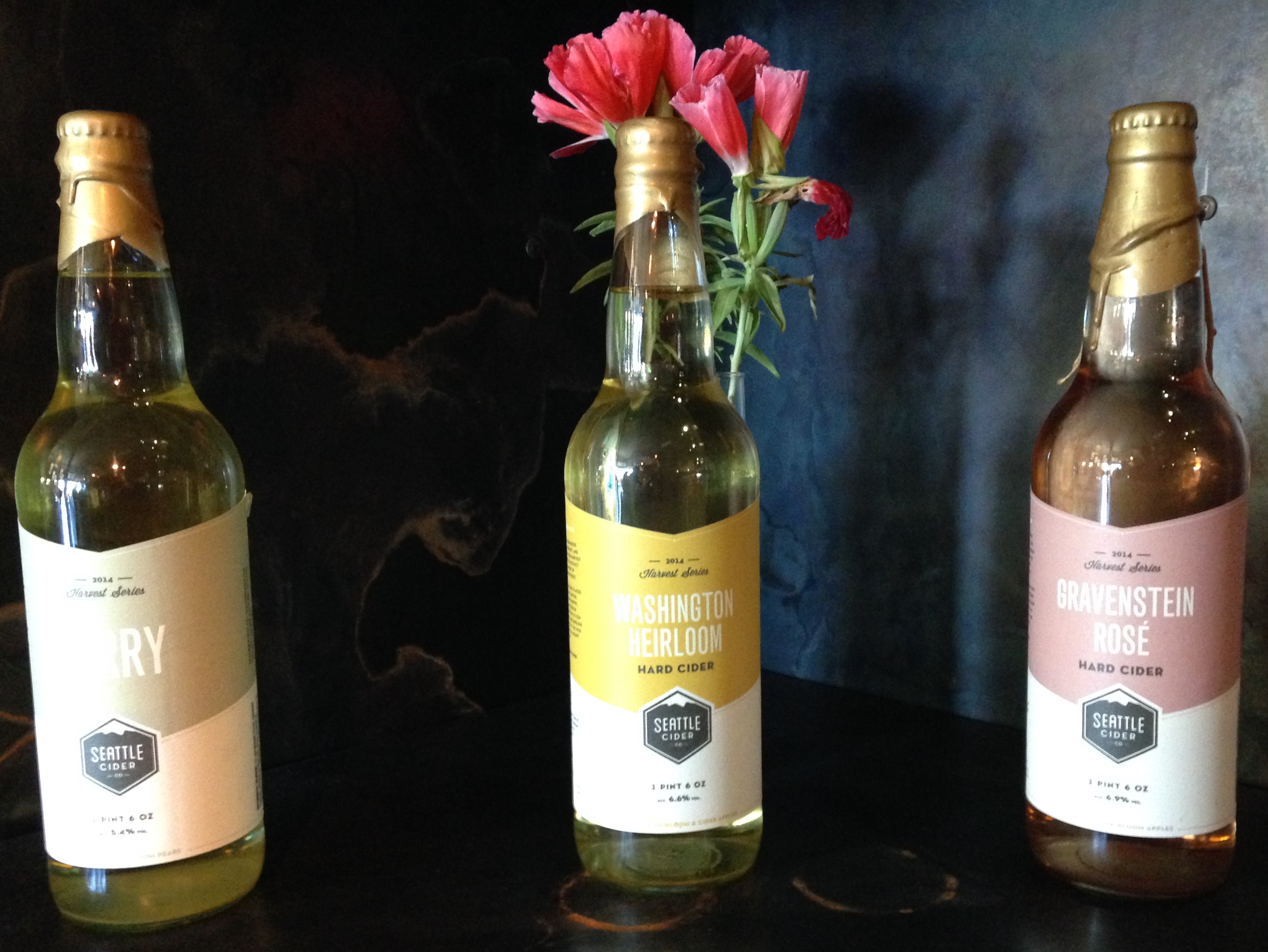
<Seattle Cider’s Harvest series:  Perry, Washington Heirloom, and Gravenstein Rose>

2015-09-10 15.51.52
<cider tap list part 1; I don’t care for Ginger and previously had the Green Tea,
but I tried the Valley Red and Woodlander Wit; see below>

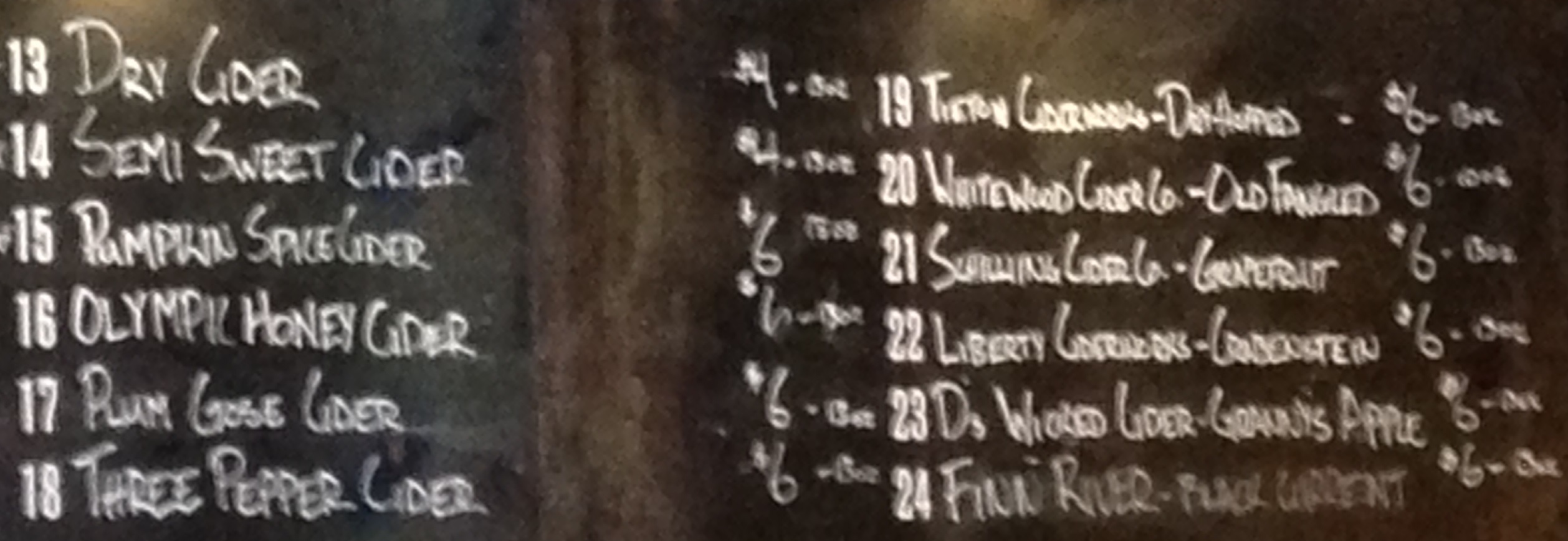
2015-09-10 15.52.02
<cider tap list part 2, where 13-18 are from Seattle Cider>
<I’ve had their Semi-Sweet and tried the Olympic Honey & Plum Gose; see below>
<I don’t care for hopped & green apple, previously had the Grapefruit & Black Currant,
and tried the Crabenstein; see below>

I ended up sampling five ciders at The Woods / Seattle Cider.  Unfortunately they didn’t have a sampler, but would pour tastes.  I really think a sampler is the best way to go anywhere which has multiple cider choices on tap.  So, I had a couple tastes, got a glass of one, then had a few more tastes.

Seattle Cider Olympic Honey.  This cider is a special release (August 2015) Seattle Cider did with the Fairmont Olympic Hotel, and only available at Seattle Cider and the restaurant/bar at the Fairmont Olympic Hotel.  This used honey from the rooftop apiary at the hotel.  I had really wanted to try this after seeing a segment they did on King 5 local news on Facebook, so I was pleased they still had some.  Retail is $9 for a 22oz bottle, but I had a 13oz tap pour for $6.  6.9% ABV.  Semi dry.  I picked up only hints of honey, but it was refreshing, and probably my favorite Seattle Cider variety so far (I’m not a huge fan of their ciders, although they have a large local following).  Moderate acidity and and mild tartness.

2015-09-10 15.34.52
<Seattle Cider Olympic Honey>

Seattle Cider Plum Gose.  This is Seattle Cider’s twist on gose (a unique style of German beer which includes coriander and salt).  It includes Jacobsen sea salt (from Portland OR), coriander, and plums, and was made using Chardonnay yeast and added malic acid.  6.9% ABV.  Semi-dry.  Very unique but mild flavor from the ingredient additions.  Lovely light berry hue from the plums, but my taster was too small to get a clear photo of the cider’s color.  Higher carbonation.  A touch of saltiness.  Apparently they previously had a full Gose cider, and would often get requests to mix it with their PNW Berry, so they decided to make something similar with plums.

Liberty Ciderworks Crabenstein.  Made using Dolgo crabapples and Gravenstein apples with wild yeast fermentation.  7.3% ABV.  Dry.  Tart and mouth-puckering with a touch of funk, but the flavor profile is pretty mild.  I like Liberty’s Manchurian Crabapple single varietal better as it is bolder, but they are completely different styles of cider (for example, the Manchurian is 12.5% ABV).

Cockrell Valley Red.  Cider with Puyallip WA raspberries.  This is the first time I’ve tried a cider from Cockrell.  6.2% ABV.  Semi-dry.  Lovely fruity nose and red hue (again, no photo; sorry), acidic, and tart.  I didn’t pick up raspberries (nor did I know that was the fruit they used until I researched this cider), but for me it was more of a general tart berry than a specific flavor.  It reminded me some of Snowdrift Red (which I prefer).

Grizzly Ciderworks Woodlander Wit-Style.  They modeled this cider after Belgian wit-style beer (they used that variety of beer yeast).  I’ve previously tried their Ridge.  6.7% ABV.  Semi-dry.  Smells slightly woody.  I didn’t pick up any of the orange peel or coriander they included in this cider, but again, it was a pretty small taste.  I found it very similar to their Ridge, but slightly more sweet, tart, and complex, and slightly less flavorful.  I prefer the Ridge, which I found to have more of the woody & earthy notes I enjoy.

2015-09-10 15.32.05

This is just the start of my Washington Cider Week posts, so stay tuned for posts on Thursday night part 2 (Burgundian with Eden & Alpenfire ciders), Cider Summit, and events I’ll be attending next week at Capitol Cider and the Schilling Cider House!  Subscribe to Cider Says using the sidebar (on the right or at the bottom of the page on mobile devices) and like us on Facebook to ensure you don’t miss out!

Atlas Blackberry

Review of Atlas Hard Blackberry Cider.  This cider appears to be made from fermented apple juice, then blackberry, elderberry, & black currant juices are added after fermentation.

2015-08-24 16.57.39

Cider:  Hard Blackberry Cider
Cidery:  Atlas Cider Co.
Cidery Location:  Bend OR
ABV:  6.2%
How Supplied:  22oz clear glass bottle

2015-08-24 16.56.38 2015-08-24 16.56.30

2015-08-24 16.56.54 2015-08-24 16.56.02 2015-08-24 16.55.51

Availability:  Year-round in OR, WA, & ID.

Cider Description:  Oregon has a state flag, song, flower, and this my friends is our nomination for a state cider.  A deep hue of purple fills the glass as we took zero short-cuts with this fine blend of blackberries and elderberries.  The tartness of the blackberries is rounded out by the complex characteristics of the elderberries.  Filled with tannins this cider leaves a delightful fry and rich finish.  Cheers to NW berries.

Cidery Description:  ATLAS Cider Co. produces authentic hard cider fermented from 100% fresh pressed fruit from our region. Partnering with Northwest farmers to source our fruit has been a priority of ours from the beginning. Our ciders start with a base of NW varieties that are pressed to achieve a balance of sweetness, tartness, and dryness. We forge our ciders in the heart of the NW in Bend, OR.  Fermented from 100% fresh pressed fruit.  All fruit from our local OR/WA region.  No use of anything artificial or colorings.  Balanced with just a touch of sweetness.  Naturally Gluten free.  22oz bottles and kegs available.

Price:  $5.50 (usually runs $7 though)
Where Bought:  My husband picked this up for me at Albertsons.  Actually, he brought home all three Atlas varieties they had!  Apple, Apricot, and Blackberry.  I did a review of the flagship Apple variety awhile back.  Atlas also makes a fourth variety, Pomegranate-Cherry.
Where Drank:  home
How Found:  It showed up in the fridge lol.

2015-08-24 16.59.24

First Impression:  Deep berry purple red.  Foam rim.  Little carbonation.  Strong berry-grape scent.

Opinion:  Semi-sweet.  Fairly tart, especially to finish.  Dan at Atlas told me the majority of the apples used in their ciders are granny smith, which I find quite interesting (they say it gives their ciders “a nice flavorful punch that are lacking in many”).  I pick up the berry notes (blackberries & elderberries), but the black currant tastes more like grape to me.  I found this cider to be quite simple and juice-like.  Thin bodied and quick finishing.  I think I would have liked more carbonation and acidity.  It was however refreshing and flavorful.

Most Similar to:  Other berry-forward ciders.  Finnriver Lavender Black Currant is a favorite of mine.

Closing Notes:   I look forward to trying their Apricot variety I already have at home; apparently it is their driest offering.  I enjoyed the Apple better than the Blackberry.  I think its awesome that Atlas uses only 100% Northwest juice and no artificial ingredients, and can still be sold at a very reasonable price point.  Plus they are family owned and operated (I give them major kudos on that one especially as family is tough enough to get along with at home sometimes!).  They have a huge almost cult-like following, especially on Facebook.  Overall Atlas Blackberry a solid berry cider but I’m not truly impressed.  However, I’ve discovered I’m not a huge fruity cider fan…I tend to like a richer bold flavor, unique, barrel aged, etc.

Check out their Vimeo site.  It currently includes three videos, including a behind the scenes look at the details to operating a cider company.

Have you tried Atlas Blackberry?  What did you think?

J.K.’s Scrumpy Farmhouse Summer

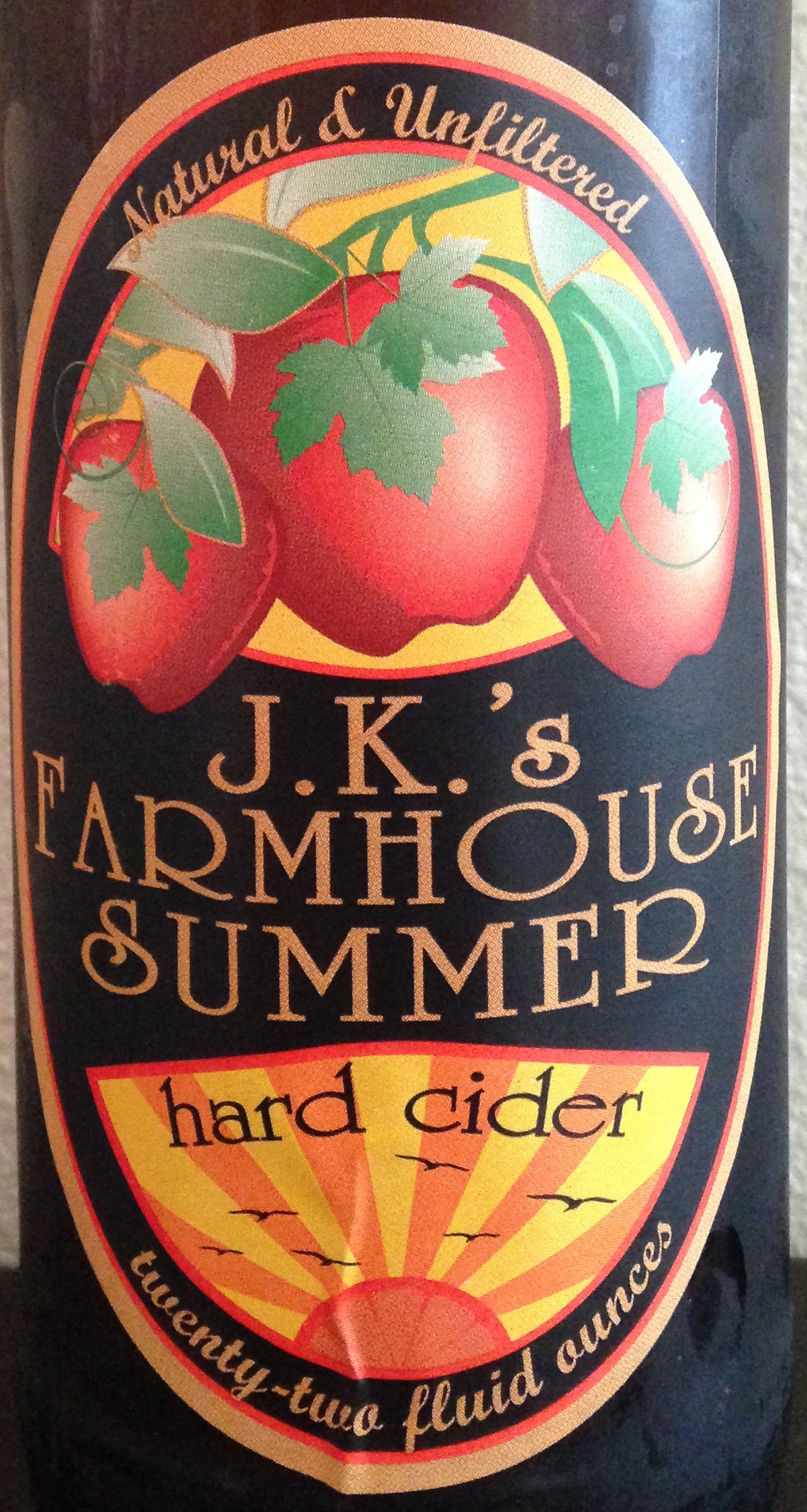
Review of Farmhouse Summer from J.K.’s Scrumpy.  This is their summer seasonal offering, and like all their cider, is organic, unfiltered, preservative/sulfite free, and made only from fresh pressed juice.

2015-09-05 16.47.13

Cider:  Farmhouse Summer
Cidery:  J.K.’s Scrumpy
Cidery Location:  Flushing MI (Almar Orchard)
ABV:  4.5%
How Supplied:  22oz bottle

2015-09-05 16.47.23  2015-09-05 16.47.50 2015-09-05 16.47.32

Availability:  Summer seasonal, semi wide release, found in approximately 35/50 states, and in parts of Canada

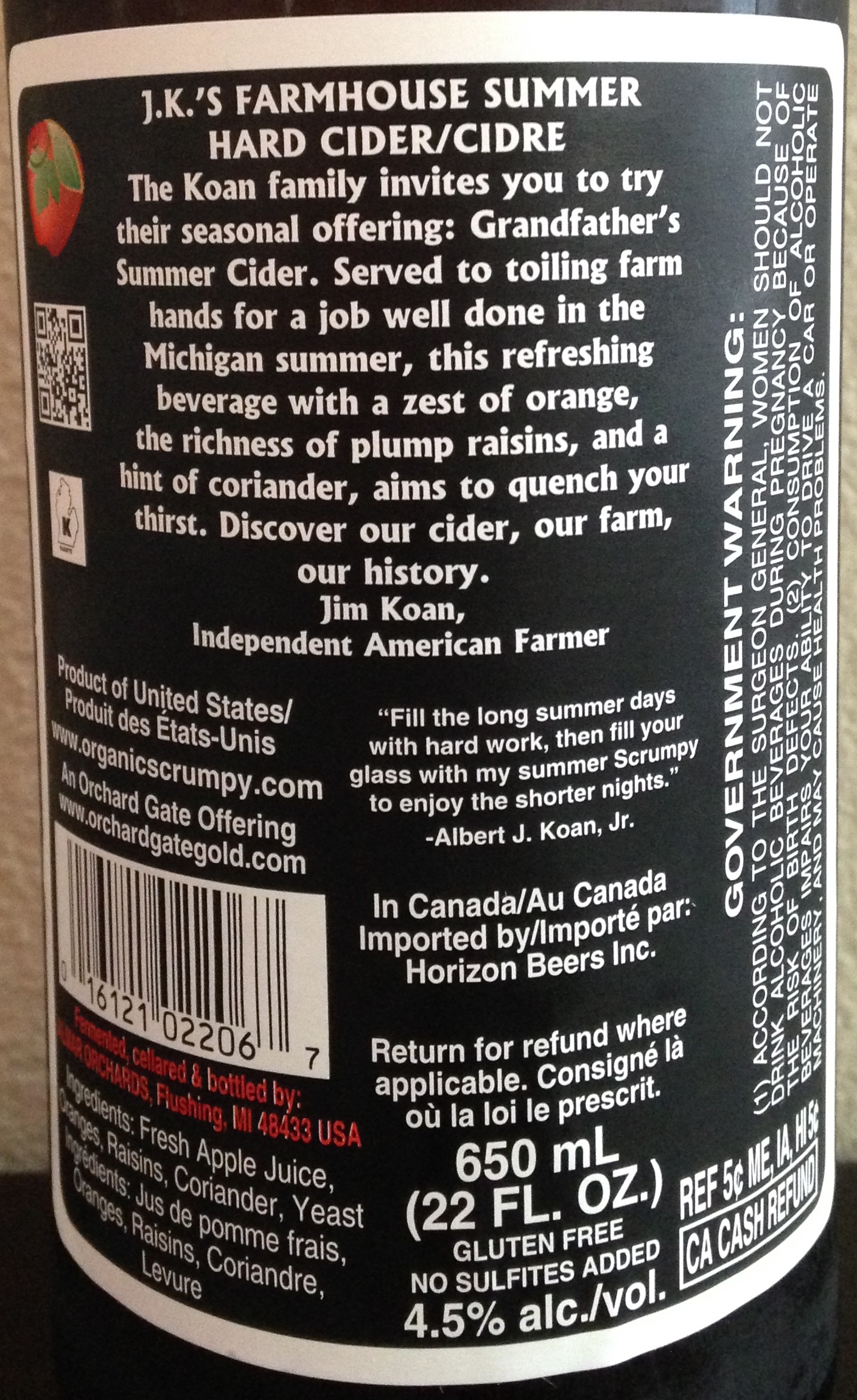
Cider Description:  The Koan family invites you to try their seasonal offering: Grandfather’s Summer Cider.  Served to toiling farm hands for a job well done in the Michigan summer, this refreshing beverage with a zest of orange, the richness of plump raisins, and a hint of coriander, aims to quench your thirst.  Discover our cider, our farm, our history.  -Jim Koan, independent American Farmer.

Additional Information from J.K.’s Scrumpy:  They grow 50 varieties of apples on 500 acres on their farm.  In the 1970s there were 36 orchards in their area, and now, only 2! Approximately 16 of those varieties go into Farmhouse Summer, including Harrison, Spy, and Cortland.  The cider is fermented for 6-16 months, then blended for consistency.  Therefore no two batches are ever alike (as they say, just how Mother Nature intended).

 They sent me these links:
Thanks to Sabrina from J.K.’s Scrumpy for the extra info!

Cidery Description:  This Original Hard-Cider has been made on our family-owned farm in Flushing, Michigan for well over a hundred years. It was first pressed back in the 1850’s. Not much as changed in the process since then. We use the same apples from the same orchards as my great-great grandfather did before the time of the Civil War. We are proud of that. It gives us a sense of history.  The cider has played an important role in the ongoing history of our farm. The sale of cider actually saved our farm during the Great Depression. And, during the Prohibition people came from far and wide for our “Special Farm Cider.”  We grow vegetables and fruits here at Almar, but our cider has kept us in business when times have gotten tough. Regretfully, it seems that history has a habit of repeating itself…These past few years, many of our nation’s orchards have closed their barn doors and orchard gateways as the influx of apple juice made from cheap concentrates arrive in the USA from China and South America. Some call it a “sign of the times,” and others seem to appreciate the “bargain” at the grocery store.  All I can say is that our Orchard Gate Gold is the real thing. It’s not a “made using” or “contains” product. IT IS REAL CIDER. Pure, natural and uniquely flavorful. We grow, harvest, and press the apples right here on the farm. It is time-consuming, labor-intensive and worth every bit of what it takes to make it.  Our cider is not only natural, it is truly organic. It always has been. It’s simply a fact of what we do – and how we do it. We use no insecticides in the farm orchards. Rather, I do what my grandfather did. I have a large flock of guinea fowl that wander about and eat the bugs. Fallen apples that have hit the ground are always a food source for pests, so I let my Berkshire pigs wander the orchard and eat the fallen apples. In a fast-paced, instant gratification society all this may seem a little old fashioned, or not “cost-effective.” But, we have a cider that is not like any other, and the idea of playing around with what makes that happen… well, it just ain’t part of the plan.

Price:  $3.99 (on sale from $6.99)
Where Bought:  Total Wine
Where Drank:  home
How Found:  I had seen this variety, but had been hesitant to try it due to the orange, coriander, and raisins, which just sounded weird.  However, discussion at the Hard Cider Appreciation Society on Facebook indicated these flavors weren’t too prominent, so when I saw it on sale I thought I’d give it a try.

2015-09-05 16.49.40

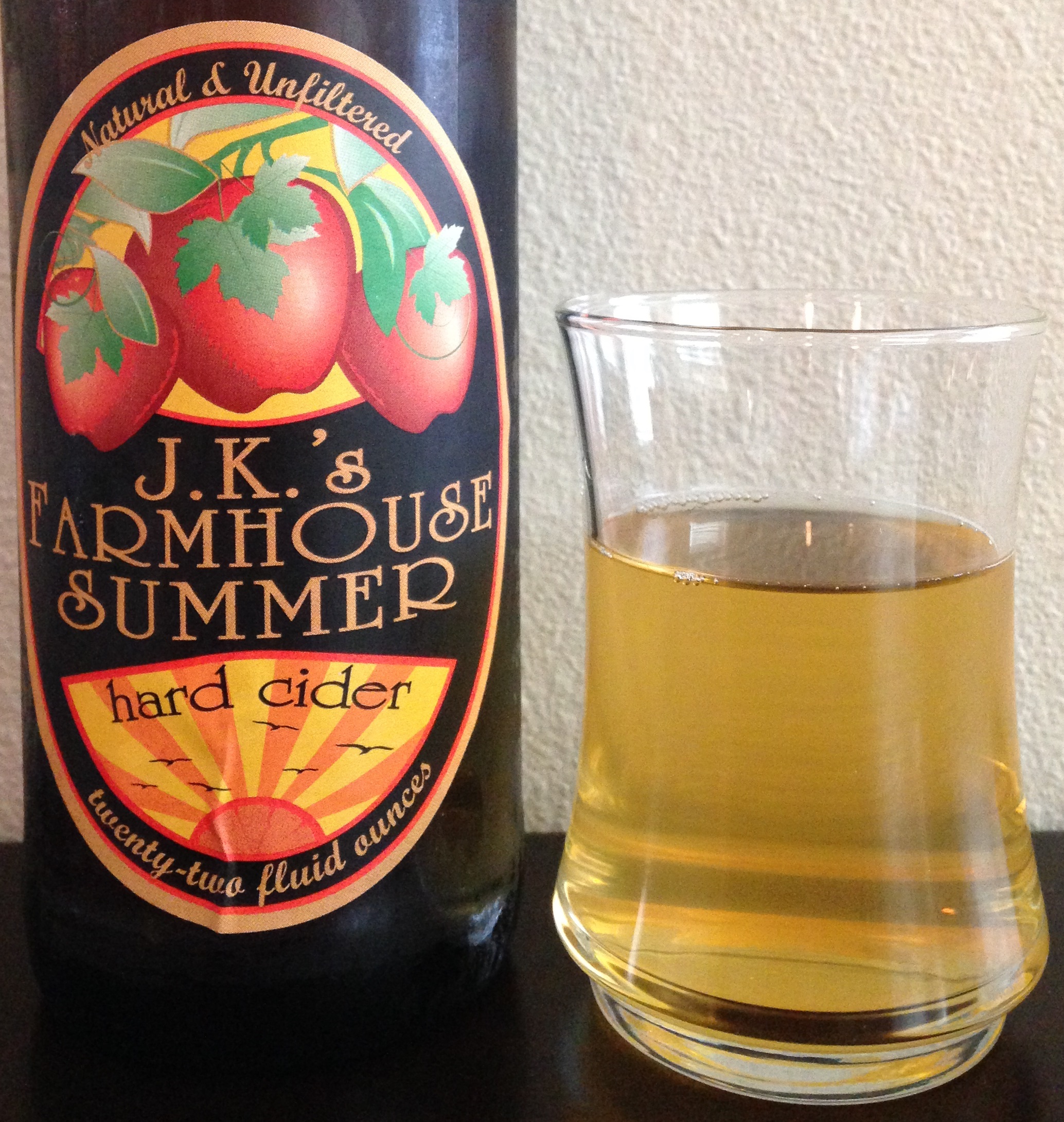
First Impression:  Hazy light amber.  Still.  Smells like sweet ripe apples, pear, citrus, and cinnamon.

Opinion:  Very sweet.  Orange, citrus, and honey notes.  However, I didn’t taste any of the pear or spice I smelled.  Apparently coriander can taste like citrus (I looked that up as its not something I’m familiar with; I also learned coriander is the seeds of the cilantro plant).  No significant acidity, tartness, or bitterness.  Medium bodied.  Syrupy taste and texture.  Quick finish, but I got an annoying lingering aftertaste/feeling at the back of my throat with this cider, almost minty?  It wasn’t as prominent for my husband, but he noticed it once I mentioned it.

Some notes about this style of cider:

  • Apparently the high degree of sweetness in their ciders is from arrested fermentation.  Allowing the cider to completely ferment makes a drier cider (as the yeast has fermented most/all of the sugar to alcohol).  This is why cidermakers often back sweeten their ciders with unfermented juice (plus that is a way to bring the ABV down to a target level).  By arresting the fermentation process they retain more sweetness.
  • Scrumpy usually refers to cider made from “scrumped” apples (which is either defined as those stolen from the ground or those which are old & shriveled up) in the West Country of England, which can be a potent and rough style of cider.  I’ve had one true Scrumpy cider, Serious Scrump from 2 Towns, and it wasn’t for me.  However, currently this term is instead used to indicate that a cider is a craft / artisan product.
  • Almost all commercial ciders use sulfites (sulphur dioxide) as a preservative.  Avoiding their use is more difficult as sulfites are used to kill the natural yeast on the apples.  The use of sulfites makes a more standardized product and reduces the risk of spoilage.  Pasteurization can instead be used.  Some folks are sensitive to sulfites, so its good to see that folks have the option of cider without them (although a small amount can be naturally occurring from the fermentation process).

Most Similar to:  Other ciders from J.K.’s Scrumpy, which have a  unique sweet farmhouse (unfiltered) taste.

Closing Notes:   I really support all their practices at J.K.’s Scrumpy / Almar Orchards (organic, no preservatives, etc), but I didn’t care for this cider.  Its amazing how low they can keep their price point while maintaining all those practices.  However, I really like their Northern Neighbor cider, which is made from Michigan and Canadian Saskatoon apples.  I’ve also tried their flagship Orchard Gate Gold, but not their Winterruption (winter seasonal) or Pair Perry.  They will have Pair Perry at Cider Summit Seattle, so I look forward to trying that one!  J.K.’s Scrumpy ciders are great for folks who like a sweet cider but want a craft product (affordable and semi widely available too).

Have you tried J.K.’s Scrumpy Farmhouse Summer?  What did you think?

where will I be this week? tasting cider of course! (Washington Cider Week & Cider Summit Seattle)

For all my Seattle peeps, if you see me at any upcoming event, say hello!  I’ll be wearing a pink CIDER SAYS t-shirt.  If you also want to meet up before or after an event, let me know.

cider week CSS_2015_Apple

Here is my schedule so far for the 5th annual Washington Cider Week and Cider Summit Seattle:

Washington Cider Week opening ceremonies at Seattle Cider with 10 cideries on tap and a food truck, Thursday September 10th, 3:00-4:30pm ish (event is 3-9pm)

East Meets West: An Evening with Eden and Alpenfire Ciders at the Burgundian Bar, Thursday September 10th, 5-7pm ish (event is 5-9pm)

Cider Summit Seattle at South Lake Union Discovery Center, Friday September 11, 2-8pm ish (VIP starts at 2pm and regular at 3pm)

Cider Summit Seattle at South Lake Union Discovery Center, Saturday September 12, noon-6pm ish

Meet & Greet, Tasting, & Book Signing with Bill Bradshaw at Capitol Cider, Tuesday September 15, 6-8pm

2 Towns Tap Night at Schilling Cider House, Thursday September 17, 6-8pm ish (event is 6-9pm)

Check out the complete Washington Cider Week event calendar here, as there is a crazy amount of events going on!  And, stay tuned for lots of Cider Summit related posts here at Cider Says.  I know a lot of folks aren’t so lucky to live in Washington, so I’ll try to make it seem like you’re here with me!  Like Cider Says on Facebook for other updates as well.

Book Review #3, CIDER – Hard and Sweet – History, Traditions and Making Your Own

Part three of four of interesting notes from cider-related books I obtained from my local library.  Here are links to part 1 and part 2.  This time around is CIDER – Hard and Sweet – History, Traditions and Making Your Own (Ben Watson, 2nd edition, published in 2009).  The first edition was published in 1999.  There is now however a 3rd edition (published 2013), paperback available for $11.43 on Amazon.  Overall I enjoyed this book more than Cider – Making, Using, & Enjoying Sweet & Hard Cider.  However, my favorite of the four cider books is yet to come!  (but is quite different than these first three)

cider hard and sweet

Chapters:

The History of Cider
Roman history
Western Europe
England
America

Apple Varieties for Cider
Sex and the Single Apple
Basic Types of Apples
Keeping Things in Proportion
Finding Your Cider Apples

Sweet Cider: From Tree to Juice
In Defense of Real Cider
How Safe Is Real Cider?
A Glass a Day Keeps the Doctor Away
Making Your Own Sweet Cider
Harvesting the Fruit
Support Your Local Cidermaker
Sweating the Apples
Milling the Fruit
Pressing the Juice
Maceration
Apple Juice
Traditional Cidermaking Photo Series

Hard Cider: From Juice to Bottle
Cidermaking 101
Basic Equipment (fermentation vessels, other fermentation equipment, measuring tools, racking and bottling equipment, cleaning and sanitizing equipment, miscellaneous items)
The Juice Before Fermentation (Sugars, Specific Gravity, and Potential Alcohol; Acids; Tannins; Yeast Nutrients and Pectic Enzymes; Sulfur Dioxide; Common Cider Disorders)
Fermentation (Yeasts, Wild and Domesticated; Starting a Yeast Culture; Some Commercial Yeast Strains Used for Cidermaking; Primary Fermentation)
Maturation and Bottling

Cider Styles and Traditions
The Influence of Soils and Climate
Regional Ciders (Spain, France, United Kingdom)
Basic Cider Styles (Draft Cider, Farmhouse or Farm Cider, French Cider, Sparkling Cider, Cyser, Apple Wine, New England-Style Cider, Specialty Ciders)
Apple Wine

Tasting and Evaluating Cider
Organizing a Cider Tasting
Collecting Ciders for Your Tasting
Props and Procedures
Evaluating Cider
Sample Cider-Tasting Score Sheet
Sample Cider-Tasting Results
Common Cider-Tasting Terms

Perry, or Pear Cider
A Short History of Perry
Making Your Own Perry
English Perry Pears Grown in North America

Stronger Waters: Cider Vinegar and Spirits
Apple Brandy (Calvados)
Pommeau
Applejack
Ice Cider
Cider Vinegar

Cooking with Cider
Cider in American Cooking (Boiled Cider, Cider Syrup, Cider Jelly)
Using Cider in Recipes
Recipes (Old-Fashioned Apple Butter, Hot Mulled Cider, Cider Wassail Bowl, Pork Chops Braised in Hard Cider, Chicken Breasts Vallée d’Auge, Crème Fraîche, Apple Cider Marinade, Fish Poached in Cider, Onion Cider Relish, Red Cabbage Braised in Cider, Harvest Stuffed Squash, Pears Poached in Cider, Caramel Apple Gelato, Lost Nation Cider Pie, Tarte aux Pommes – Apple Tart, Pâte Brisée, Boiled Cider Apple Crisp, Pears Preserved in Calvados)

Cidermaking: Beyond the Basics
Scaling Up
Measuring Instruments
Winesap
Traditional Sparkling Cider
Fermentation Vessels and Supplies
Fermenting and Aging in Oak Barrels
Kegging, Filtration, and Bottling Equipment
Keeping Things Sweet (Keeving; Cold Shocking, Filtering, and Stabilizing Cider)
In-Bottle Pasteurization
A Final Thought

What I Found Interesting:

History

  • Only a few species of small wild apples are native to North America (crabapples).  The first apples as we know them were brought by colonists from England and Western Europe, as early as 1623.
  • The American folk hero Johnny Appleseed (real name John Chapman) became a symbol of the apple’s spread as it followed Western settlement in the years after the Revolutionary War.  He operated an extensive frontier nursery In Pennsylvania, and traveled planting apple seeds and selling seedling trees to settlers.
  • By 1767 in Massachusetts more than 35 gallons of cider per person per year was consumed.  Cider was even a common unit of exchange.
  • By 1775 one out of every ten farms in New England owned and operated its own cider mill.  Most early settlers preferred not to drink the local water, which could be unpalatable or even polluted.
  • The first apple trees came to Washington state around 1848.  By 2000, Washington produced half of the U.S. apple crop (5% of the world crop).
  • Cider production had already dropped (due to decreased consumption) prior to Prohibition, from 55 million gallons in 1899 to 13 million gallons in 1919.
  • China is the world’s largest apple growing nation.  [which is probably why we hear of some cidermakers unfortunately using cheap Chinese imported apple juice concentrate in cider]

Cider Apple Varieties

  • Most apples benefit from being cross-pollinated by another tree of a separate variety.
  • A good fresh cider requires sweetness and body, sprightliness and aroma, and very few if any single apple varieties possess all of these qualities.
  • True cider apples are mainly bitter-tasting varieties that are used in making the classic hard ciders of Northwest Europe and England.  The bitterness and astringency of those apples come from the tannins that are present in both the skin and flesh of the fruit.
  • Apples vary wildly in sugar content from around 6% to nearly 25% (Wickson, a small high-sugar and high-acid variety from intentionally crossing the Newtown Pippin and Esopus Spitzenburg).
  • Apples of the same variety may vary considerably in sweetness during different growing seasons and regions.
  • Apples vary wildly in acid content, from 0.1% to 1.3%.

Cidermaking

  • Sweet cider naturally contains approximately 15% sucrose, 74% fructose, and 11% glucose.
  • Tannins give a hard cider body and a dry finish, and help clarify (fine) the cider making it less hazy and more brilliant.
  • The complex bouquet of a hard cider is partly due to the aromatic varieties of apples used in the blend, but also partly due to the fragrant compounds produced as a result of yeast fermentation.

Cider Styles and Traditions

  • An important contributor to the character of any cider is something the French call terroir, a term referring to the place where the fruit is grown (soil composition, climate, microclimate, etc).
  • Two relatively unknown types of cider in the U.S. are German Apfelwein (8% of the world’s cider) and cider from South Africa (14% of the world’s cider, second only to the UK).
  • The greatest, oldest, and most highly regarded cidermaking areas of Europe are England’s West Country, Normandy and Brittany in France, and Asturias and the Basque region of Spain.
  • French cider is classified as Cidre Doux (up to 3% ABV), Demi-Sec (3-5% ABV), and Cidre Brut (over 5% ABV), and is 9% of the cider produced worldwide.
  • Draft cider is the most common variety in America, and most often sold in six-packs.  It is usually made of juice from surplus dessert apples, fermented to dryness, filtered, cut with carbonated water and/or apple juice to 5-6% ABV, and sulfited before bottling.  It is sweet to semi-sweet and should be drunk very cold.
  • Farmhouse or farm cider is traditional, “real” cider, or English dry cider.  It is usually still, dry, fully fermented to 5%+ ABV, and may have sweeteners added.
  • French cider of cidre doux relies on a process known as keeving, in which pectins and nitrogenous yeast nutrients are precipitated out of the cider, then clarified juice is siphoned into another container to begin a long slow period of fermentation  It has some residual sweetness and is only 2-4% ABV.
  • Sparkling cider is carbonated in some way, either by natural carbonation (secondary fermentation with a small amount of sugar), the French “closed cuvee” champagne method, or force/artificial carbonation.
  • The main difference between sparkling and effervescent ciders is the clarify and brilliance of the former, from removal of spent yeasts and other residues.
  • Apple wine is produced when sugar is added to raise the specific gravity high enough to obtain a 10-12% ABV product.  Otherwise there is little or no difference from hard cider.

Fox Tail Fuzzy Haven

Review of Fox Tail’s Fuzzy Haven cider, a dry peach cider I tried on tap.  This is the first time I’ve tried a cider from Fox Tail, although I’ve seen their flagship Sir Issac variety in bottles (at Full Throttle Bottles in Seattle).  I believe that is currently their only bottled cider, although they have expansion plans, and they offer a number of varieties on tap.

Cider:  Fuzzy Haven
Cidery:  Fox Tail
Cidery Location:  Hood River OR
ABV:  5.5%
How Supplied:  on tap

fox tail logo

Availability:  regional, only North & Central OR and Western WA

Cider Description:  Named for everyone’s favorite peach variety the Red Haven. It has great notes and flavor of peach mixed with apples. (Dry to Semi-Dry)
[Fox Tail’s website says 6.2% ABV, but this was listed as 5.5% ABV on the menu board.  I imagine it may vary batch to batch, and I’m more likely to believe the menu board as listing what the keg said.]

Cidery Description:  Fox-Tail Cider comes with a long history of family farming in Oregon. It all started in the late 1800’s with a German immigrant who planted apple trees to export apples back to Europe. August Paasch created the Paasch packing label for domestic and export. He continued farming with his sons into the 20th century.  Every fall August would crush up a few barrels of raw squeezed apple cider and let it naturally ferment. He was always a big hit when he’d bring the barrels back out for the New Years Eve party that following winter. Five generations later, his Great Great Grandsons still work the land. Growing not only apples, but pears, cherries, peaches and more. In 2009 Bob and long time friend Justin Cardwell began doing test batches of hard cider. Foreseeing that in the next few years there would be a reemergence of the cider industry. (Cider was America’s drink of choice before prohibition.) In 2013, Fox-Tail opened its doors next to Smiley’s Red Barn in the heart of the fruit growing area of the valley. Now distributing throughout the Pacific Northwest, Fox-Tail Cider has only begun to tell its tale.

They have a taproom open seasonally with 10 hard cider selections (5 of theirs and 5 others),plus non-alcoholic cider.

2015-09-04 16.41.48
<tap list at ‘Round the Table Gamer Pub in Lynnwood WA>

2015-09-04 16.41.41
<my selection>

Price:  $5.50 / pint on tap
Where Drank:  ‘Round the Table Gamer Pub in Lynnwood WA.  I heard about them on Facebook and visited just for the cider, as they have three on tap and a few bottle selections as well.  Their other cider tap selections that day were Finnriver Habanero and Tieton Cider Works Dry Apple.  They even had a mead (Kurt’s Apple Pie from Moonlight Meadery).  It wasn’t really the type of scene my husband and I like on a Friday night though…lots of teenagers, and everyone was very into the games they were playing, but apparently their typical scene is more family-like.  It wasn’t so much a place to hang out and just have a drink (no bar, and it was library type tables & chairs to accommodate game play).

However, I wasn’t really expecting a bar type atmosphere (for that sort of vibe in the same area, my vote is definitely Special Brews, which has a larger tap list but less cider, and a huge bottle selection).  I imagine ‘Round the Table is a really good family place though, which is what they cater to (vs. a 21+ bar).  They sell all types of games, have a selection of games which you can test play for free, and a community puzzle.  The prices were reasonable, they had a small food selection (toaster oven type stuff), and about a dozen varieties of Full Tilt ice cream.  There were also specialty sodas, including on tap.  They even do growler fills (32oz).  Check out this article about their opening last year.  The co-owner even got in touch with me and mentioned they really want to do a cider event, so I look forward to coming back for anything cider-related!

2015-09-04 16.24.34

First Impression:  Yellow hue.  Light foam ring.  No visible bubbles/carbonation.  Mild apple-peach slightly earthy scent.

Opinion:  Dry to semi-dry.  Hints of peach and citrus, but I found Fuzzy Haven to be a very mild flavored cider.  Crisp tasting and fairly easy to drink.  Moderate acidity.  Mild bitterness,  Mild to moderate tartness.  Light bodied.  Very little carbonation.  Quick finishing.  Slightly earthy but not funky.  I looked it up before ordering a pint, so I was expecting it to be dry, but I’d thought there would be more peach flavor.

Most Similar to:  Other mild fruity ciders.  I’ve tasted this most often with cherry (of which I’ve had at least 8 types), but I’ve also had one peach cider, which I found to be mild, from Blue Mountain.

Closing Notes:   I’d recommend Fox Tail Fuzzy Haven for someone who likes drier fruity but mild ciders.  Although it was a very solid cider, I didn’t especially enjoy it…I usually go for ciders which are more boldly flavored.  However, I’d be interested to try other varieties from them.

Have you tried any ciders from Fox Tail?  What did you think?

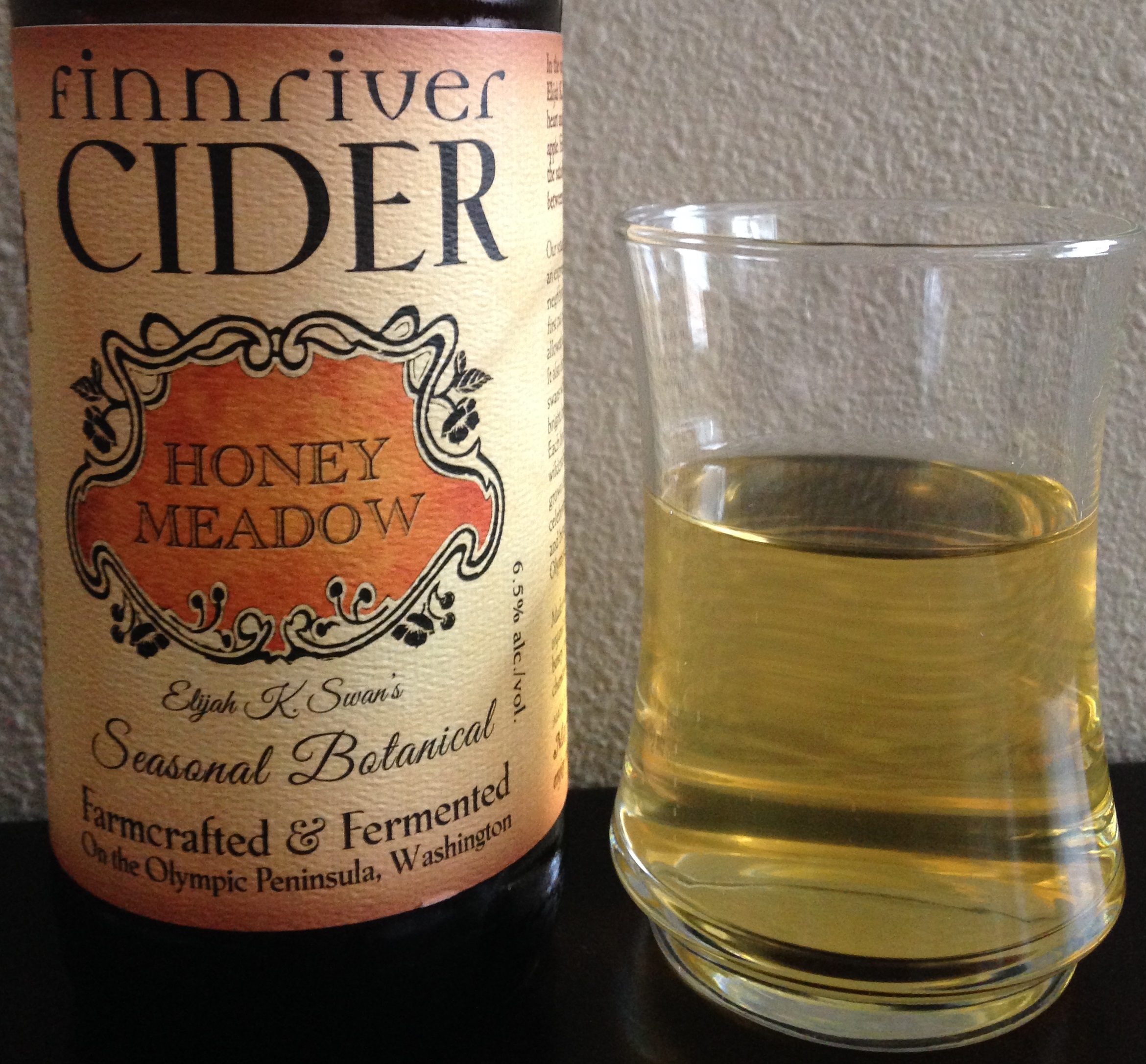
Finnriver Honey Meadow

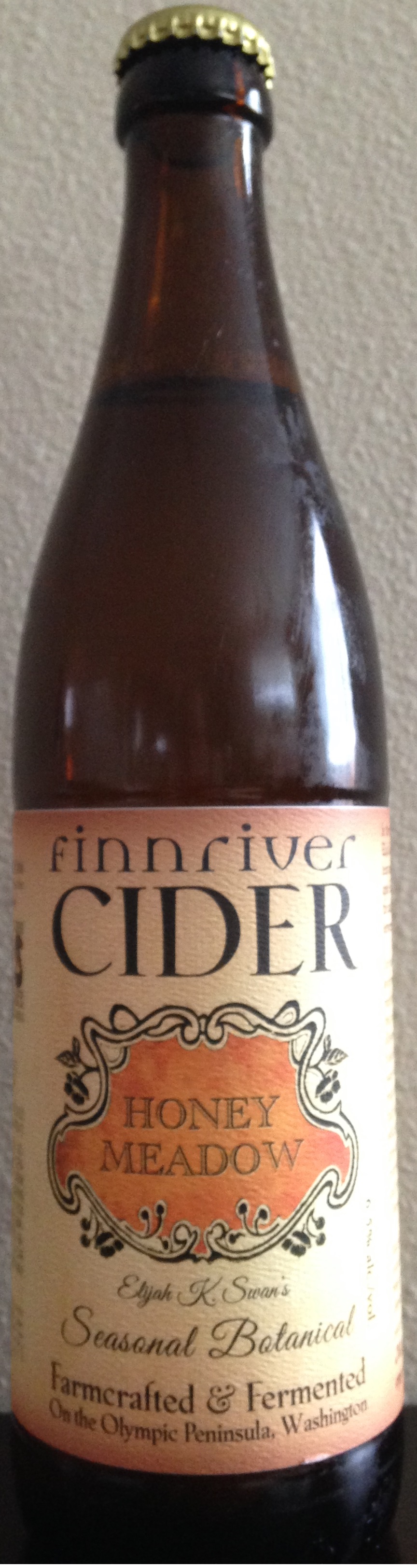
Review of Honey Meadow from Finnriver, their Spring seasonal botanical release.  I’ve tried a number of other Finnriver ciders (Oak & Apple, Habanero, Black Currant, Lavender Black Currant, & Fire Barrel), but this is the first full Finnriver review at Cider Says!  Finnriver has gorgeous bottles, an awesomely informative website, and of course, tasty ciders!  They also make fruit wine (brandy and port-style).  Here is a great illustrated Finnriver product guide.
2015-08-21 16.03.17

Cider:  Honey Meadow
Cidery:  Finnriver
Cidery Location:  Chimacum WA
ABV:  6.5%
How Supplied:  500ml bottle

2015-08-21 16.03.30 2015-08-21 16.04.09 2015-08-21 16.04.21

Availability:  Spring time in WA, OR, CA, AZ, NV, TX, IL, CO, and Alberta & BC Canada (detailed info here).  They also have an online store (which can ship to WA, OR, CA, AK, CO, MN, FL, & WA D.C.)

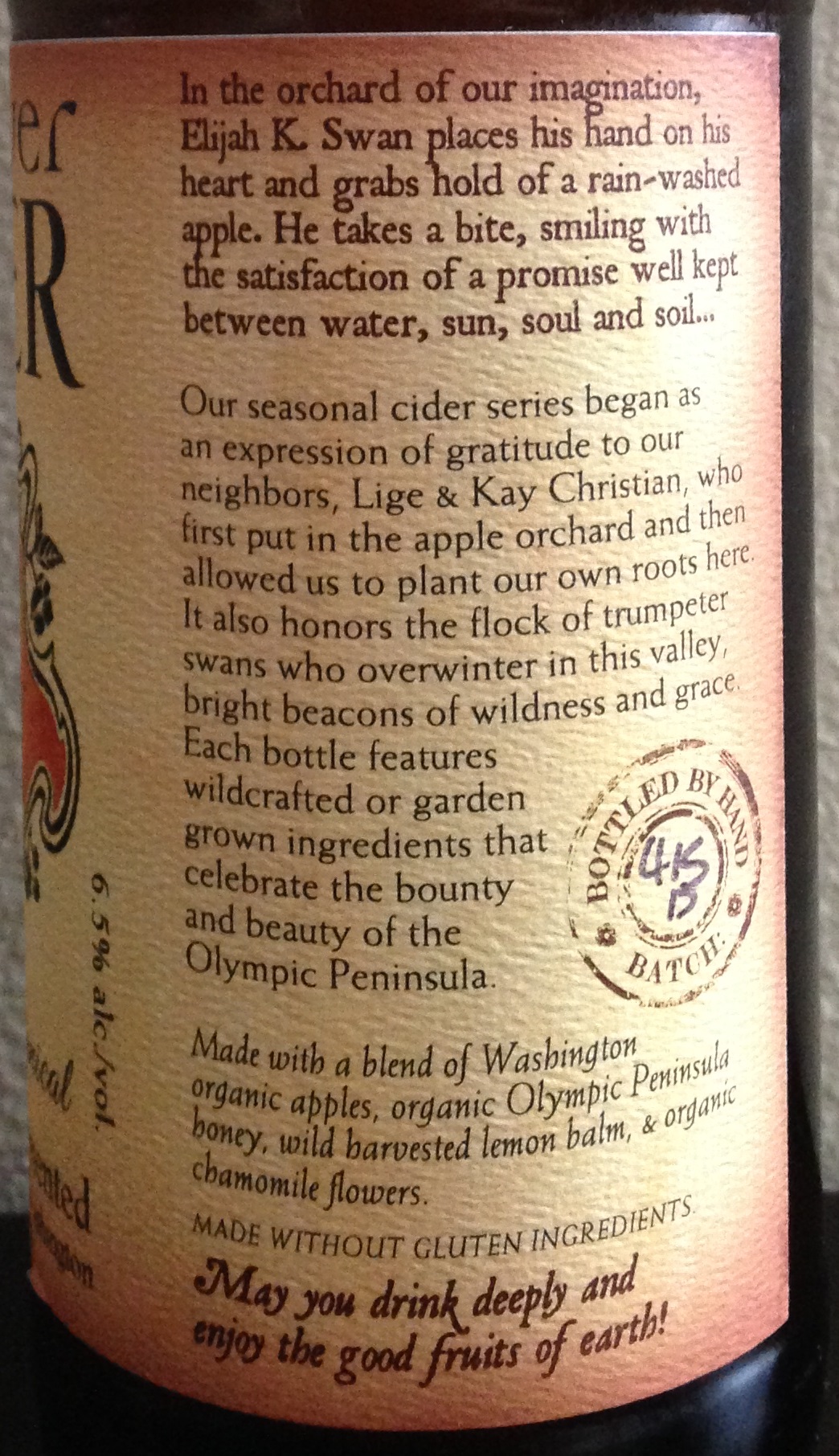
Cider Description:  Finnriver’s ‘Elijah K. Swan’ Infused Botanical Hard Ciders are named after the good folks who sold us the farm (Lige & Kay Christian) and who first planted apple trees here, as well as for the trumpeter swans that overwinter in the valley.  This cider is a tribute to our neighbors and to those big white birds who remind us that earth is still wild.  Each season the ‘Elijah K. Swan’ release seeks to capture the wild and garden-grown taste of life on the Olympic Peninsula.

The Honey Meadow cider is our SPRING release, featuring Finnriver’s bright base of fermented organic apples, backsweetened with Olympic Peninsula honey and infused with local lemon balm and chamomile.  With thanks to Denise at Mountain Spirit Herbal Company and Tinker Cavallero, local gardener extraordinaire, for finding us just the right herbs for this blend.  Drinking this might make you feel like a happy honeybee after a great green day among the blossoms…

Cidery Description:  At Finnriver we gather and ferment the flavors of the land to offer you farmcrafted hard ciders and spirited fruit wines. We are inspired by the allure of the fruit, the ancient history of the craft of fermentation and the lively traditions we now seek to revive.  Our mission is to inspire a deeper connection to the land that sustains us….Some of these ciders are small-batch, seasonal and labor-intensive. Others are produced with contemporary methods and more readily available year-round…Finnriver grows over twenty varieties of traditional and heirloom apples in our organic orchard, to feature in our traditional and specialty ciders.  (they have a tasting room open seven days a week, noon to 5pm)

Price:  $7.99 (on sale from $9.99)
Where Bought:  Total Wine
Where Drank:  home
How Found:  Browsing, but I had heard of this cider before.

2015-08-21 16.06.48

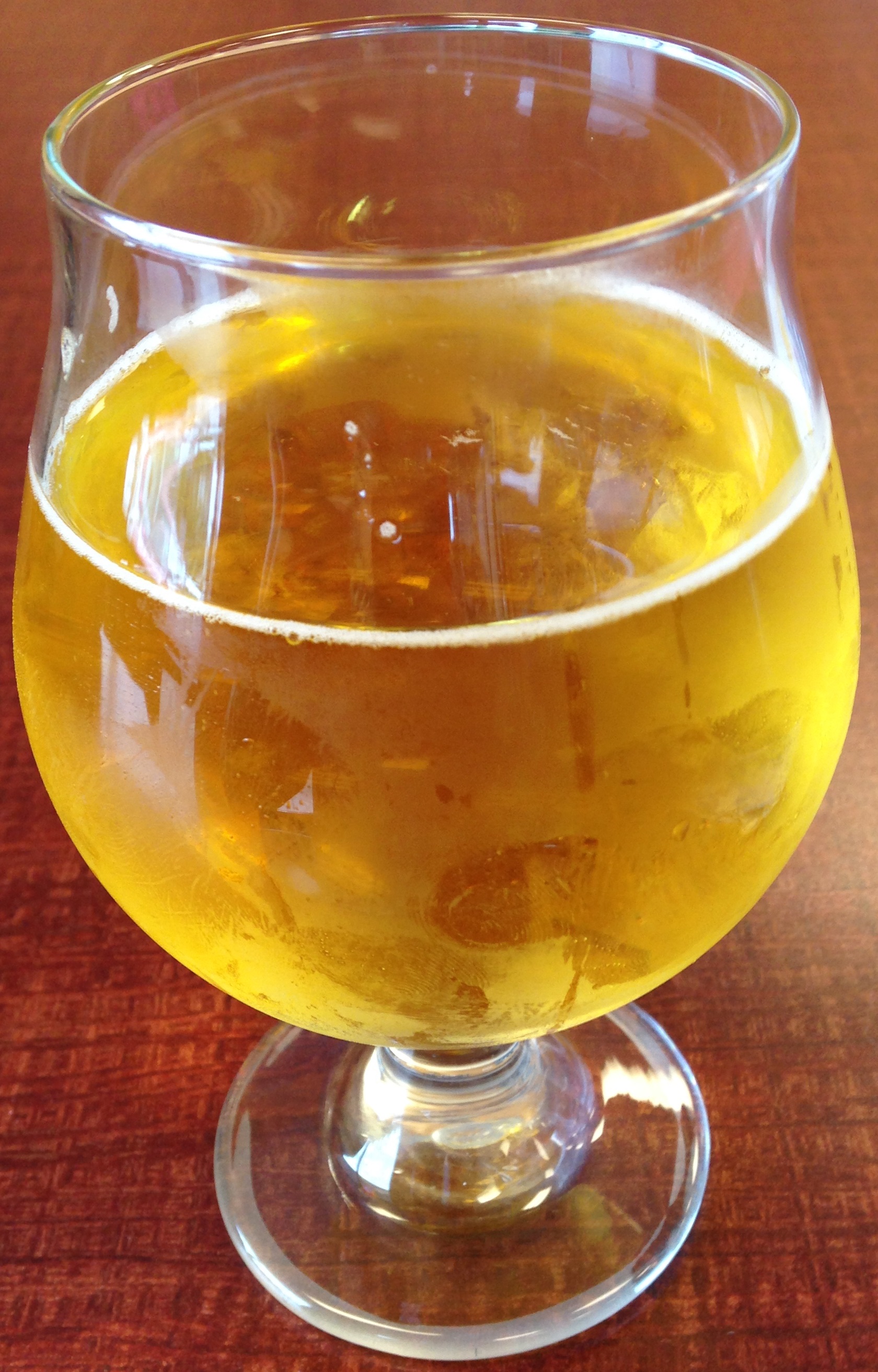
First Impression:  Honey yellow hue.  Medium carbonation upon pouring, and tiny bubbles remain.  Smells of ripe apples, honey, and chamomile.

Opinion:  Semi-sweet.  Tastes of the honey and chamomile it smells like.  I think I pick up the lemon balm more with the moderate tartness (I wouldn’t have identified it without the description).  Carbonated mouthfeel and medium bodied.  Mild sourness and bitterness.  Mild earthy funk, and a flavor that makes me think of honeycomb?  Very unique and semi-complex.  I like the herbal qualities and don’t think it is overdone at all (which I was afraid of, but was unfounded).  Great for spring & summer time!  I picked this cider up a couple weeks ago and knew I wanted to drink it before the seasons changed (where has the summer gone?).

Most Similar to:  Woodchuck Out on a Limb Oopsy Daisy, which although it is a significantly sweeter and commercially-made cider, has some similar honey & chamomile flavors.  i think the Finnriver cider is much better done, with a more complex crafted balanced flavor.  I’ve had one other honey cider as well, Angry Orchard Summer Honey, but wasn’t a fan (tasted syrupy to me).

Closing Notes:   Tasty!  This makes me want to try more of their seasonal botanical line, as I liked both Honey Meadow and Lavender Black Currant.  I also really want to try some of Finnriver’s special releases (Artisan Sparkling, Apple Blueberry, Golden Russet, and Apple Abbey), but don’t remember seeing any of them near me.  Maybe now that I start looking I will though.

Have you tried Finnriver Honey Meadow?  What did you think?

Red Tank Happy Cider

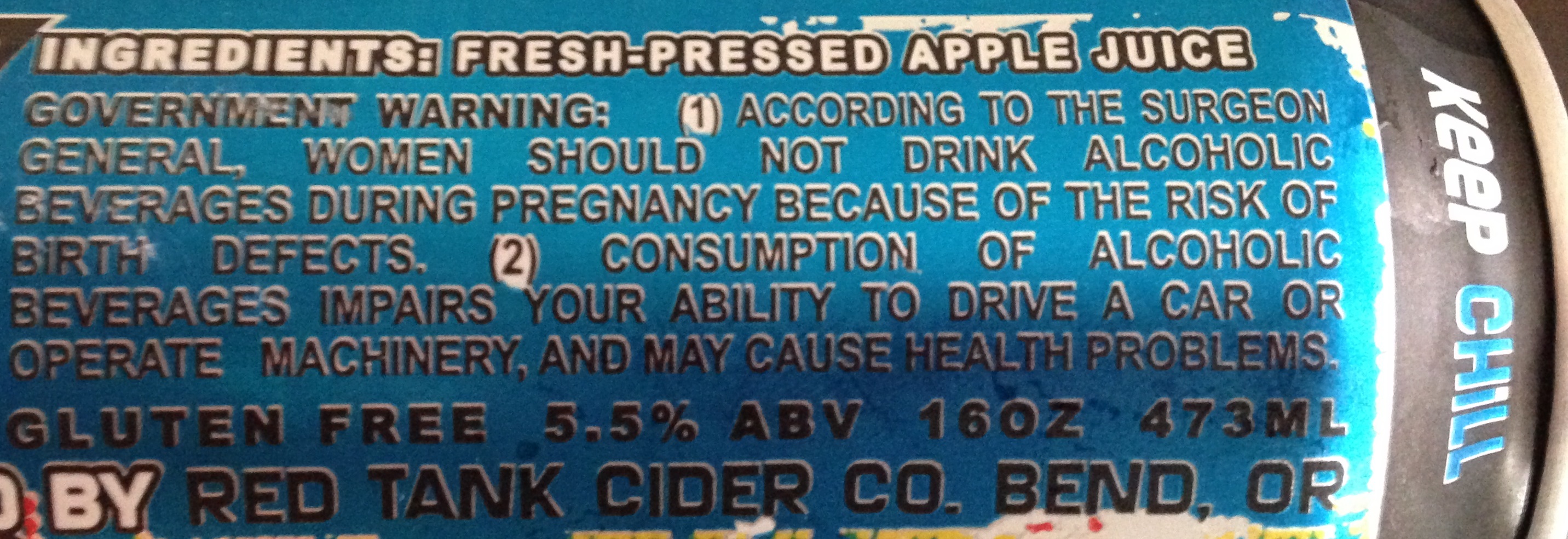
Review of Red Tank Happy Cider.  This is currently Red Tank’s only cider available outside of kegs.  However, they have numerous varieties available on tap, and plan to have their Roughneck Cider available in cans in November.  What vibrant packaging!

2015-08-16 16.28.51  2015-08-16 16.28.40

Cider:  Happy Cider
Cidery:  Red Tank
Cidery Location:  Bend OR
ABV:  5.5%
How Supplied:  16oz cans (four pack, although I bought this one individually)

2015-08-16 16.28.19
There is a lack of information on the can, although unfortunately that is quite common.  Actually, I couldn’t even find much information online on this cider.  So, I e-mailed the cidery.

Availability:  Limited to OR and WA (ID and Northern CA soon)

Information from Drew Wilson at Red Tank Cider Company:

Cider Description:  An authentic, powerful apple profile with a crisp, clean acid background. Balanced with just enough sweetness to bring it all together. We wanted a cider that made us Happy, so we made one. We’re not making any health claims, it’s just really good.  Made only from 100% fresh-pressed NW apples.
Happy Cider is currently our only packaged product because we thought it a very approachable cider.  It is fruit forward and clean. Fresh pressed apple juice and yeast are our only ingredients in Happy Cider. Our juice is made up of a blend of table apple juice (Red and Golden Delicious, Granny Smith, etc.)

Cidery Description:  Northwest craft cider.  Born from years of industry experience, Red Tank Cider creates real North West hard cider. We make cider because we have a serious, uncontrollable passion for it. We won’t stop. It’s not supposed to be easy. That’s why it tastes so good. We practice sustainable techniques in our cider house. We use only apples, yeast, and natural sulfites to make our cider. We do not put in any chemical additives and present our craft in its natural form.

Red Tank Cider is the first cider company in Bend Oregon.  We started this company with knowledge and sweat.  We have not taken out any loans or taken on any investors in our effort to bring the people cider.  From the people for the people.  We currently produce around 700 barrels a year with our eye on expanding that to over 2,000 within the next 18 months.

Additional Notes:  Bend OR has two cideries, Red Tank and Atlas.  Red Tank has a tasting room open Friday 4-6pm and by appointment.  Atlas has a tasting room open Wed-Sat 11am-11pm and Sun-Tues 11am-7:30pm.  I reviewed Atlas’ flagship cider awhile back.  Atlas has an especially large following online for their size.

Price:  $3.79 / can (runs about $14 for a full four pack)
Where Bought:  Total Wine
Where Drank:  home
How Found:  Browsing.  I’d seen this variety for awhile but skipped buying it due to the price.  However, I saw some talk online that it was good, and I was curious.

2015-08-16 16.29.31

First Impression:  Medium amber.  Moderate carbonation upon pouring.  Sweet cooked apple scent.

Opinion:  Between semi-dry and semi-sweet.  Clean, smooth, crisp, and refreshing.  Moderate tartness, bitterness, and acidity levels.  This cider seemed to go almost flat quite quickly.  Medium length finish with some lingering bitterness (although I’ll admit I’m sensitive to bitterness).  Some caramel and vanilla notes.  However, I found the flavor overall to be quite mild, almost watered down tasting.  Also, it was on the boring side for my tastes.  I tend to like bold & unique ciders though, and this is more of a plain flagship type cider.  Additionally, it seemed to have a lot of apple “juice” flavor for not being made from concentrate.  Overall I think its commendable that Red Tank is making a cider with 100% fresh pressed local juice without additives and without too much sweetness.  It just didn’t wow me, especially for the cost.

Most Similar to:  Other local flagship ciders I’ve tried.  The one that especially comes to mind is from HUB, which I have also reviewed here, probably due to the sweetness level and the lingering bitterness.  Another one is 2 Towns Bright Cider.

Closing Notes:   Although it didn’t impress me, Happy Cider is however a solid choice and I’d be very interested to try some of their other ciders in the future.

Have you tried Red Tank Happy Cider?  What did you think?

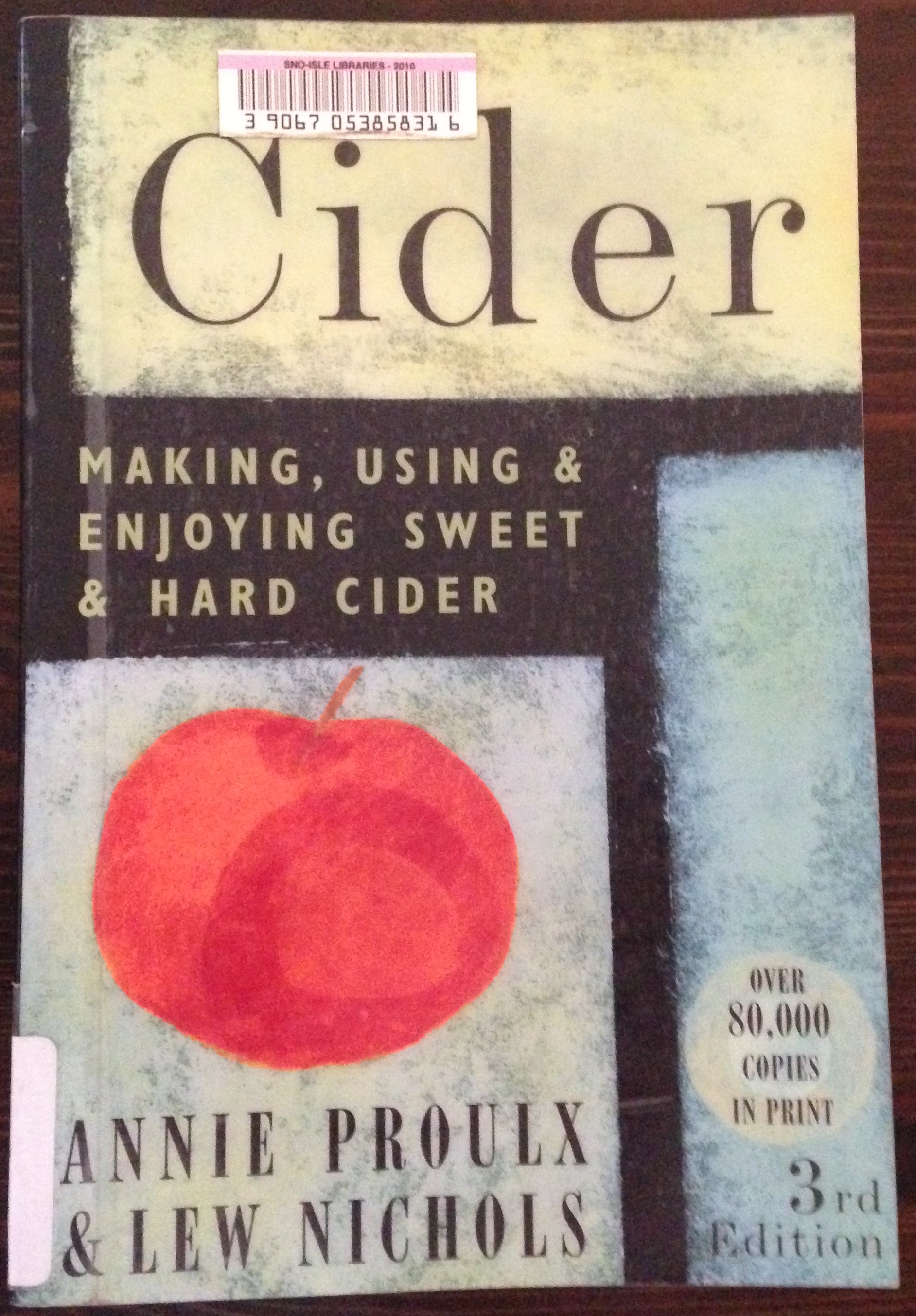
Book Review #2, Cider – Making, Using, & Enjoying Sweet & Hard Cider

Part two of four of interesting notes from cider-related books I obtained from my local library (Part 1 is available here).  This time around is Cider – Making, Using, & Enjoying Sweet & Hard Cider (Annie Proulx & Lew Nichols, 3rd edition, published in 2003).  Similarly to The New Cider Maker’s Handbook, the majority of this book has a cidermaking focus.  Paperback priced at $10.75 on Amazon.  From my perusal, The New Cider Maker’s Handbook seems to be a better choice over this one, mostly as it is more thorough and has an easier to read layout.  Additionally, hard cider has really evolved in the U.S. since 2003!

making using enjoying cider

Chapters:

Cidermaking: What You Need and How to Do It
Cidermaking, Step by Step
Equipment and Materials: How to Use Them
Cider Disorders

Making Different Cider Varieties
Basic Still Blended Cider from North American Varieties
Naturally Sparkling and Champagne Ciders
Old-Fashioned New England Cider
French Cider
Cider in a Hurry!

Apples for Cider
The Apple – Body and Soul
Good Cider Apples
European Cider Apples
Canadian Apples
North American Astringents
North American Cultivars Used in Making Cider

The Home Cider Orchard
The Orchard – from Dream to Reality
Climate and Weather
Sizing up the Site
Soil
Staking Out Your Orchard’s Claim
Planting
Orchard Care
Diseases, Insects, and Wildlife
The Harvest
Developing Your Own Cider Apple Trees

Beyond Cider:  Vinegars, Brandy, Tasting, and Cooking
How to Make Vinegar
Aromatic and Herb Vinegars
Applejack and Apple Brandy
Apple Brandy
Cider for Tasting, Drinking, and Cooking
Cider to Drink and in the Kitchen

Cider and the Law
U.S. and Federal Law and Regulations
Canada

Appendix: Making Your Own Equipment
Plans
Materials
Ingenuity
Kits
Websites

What I Found Interesting:

  • Twelve steps of cidermaking:  harvest, “sweating”, washing, grinding, pressing, blending, testing, fermentation, racking off, filtering or fining, bottling, and storage.
  • Popular proportions for juices are neutral base (30-60%), tart (10-20%), aromatic (10-20%), and astringent (5-20%).
  • Tannins are complex phenolics which add a slight bitter tang and astringency to cider, and give the finest ciders their flavor and personality.  They do not add acidity to the juice, as does malic, tartaric, or citric acids.  Dessert apples have about one-fifth the tannins of European cider apples.
  • The single most important step in cidermaking is acquiring fine-flavored, well-ripened apples with good levels of acid and tannin.
  • A standard apple tree will produce about ten bushels of apples and has a lifespan of around a hundred years.  (there are also semidwarf and dwarf trees)
    • One bushel of apples weighs about 45 pounds, and will yield 2-3 gallons of cider.
  • Tulip-shaped clear wine glasses are recommended to hold the cider bouquet at the lip of the glass.
  • The sweeter the cider the colder it should be served.  Drier cider may be served at room temperature.
  • Describing scents, flavors, and tastes is a difficult job, since they are perceived differently by people, linked to obscure personal memories, and to different culturally acquired food habits.
  • Cider color varies based on both the apple varieties and the way it was made.
  • For a cider tasting, go from dry to sweet, young to old, and lighter to heavier alcohol content.

Washington Cider Week Events Surrounding Cider Summit Seattle

For my Seattle peeps…what Washington Cider Week events are you going to?  I’m thinking of the following:

East Meets West: An Evening with Eden and Alpenfire Ciders (Thurs Sept 10, 5-9pm, Burgundian Bar)

Tasting and book signing with Bill Bradshaw (Tues Sept 15, 6-8pm, Capitol Cider, $30)

One or more events at the Schilling Cider House, such as the wood aged, Finnriver, Portland Cider Co, 2 Towns, and/or Schilling nights (they have something every night 09/10-09/18, then 09/20, each from 6-9pm).

There is also a cool sounding one the day after Cider Summit, Cider Fete (Sun Sept 13, 3-7pm, Bottlehouse), but I’m guessing my liver may need a break by then…

Keep an eye on the calendar at http://www.nwcider.com/cider-events/, although some of these aren’t even on there yet.

cider week

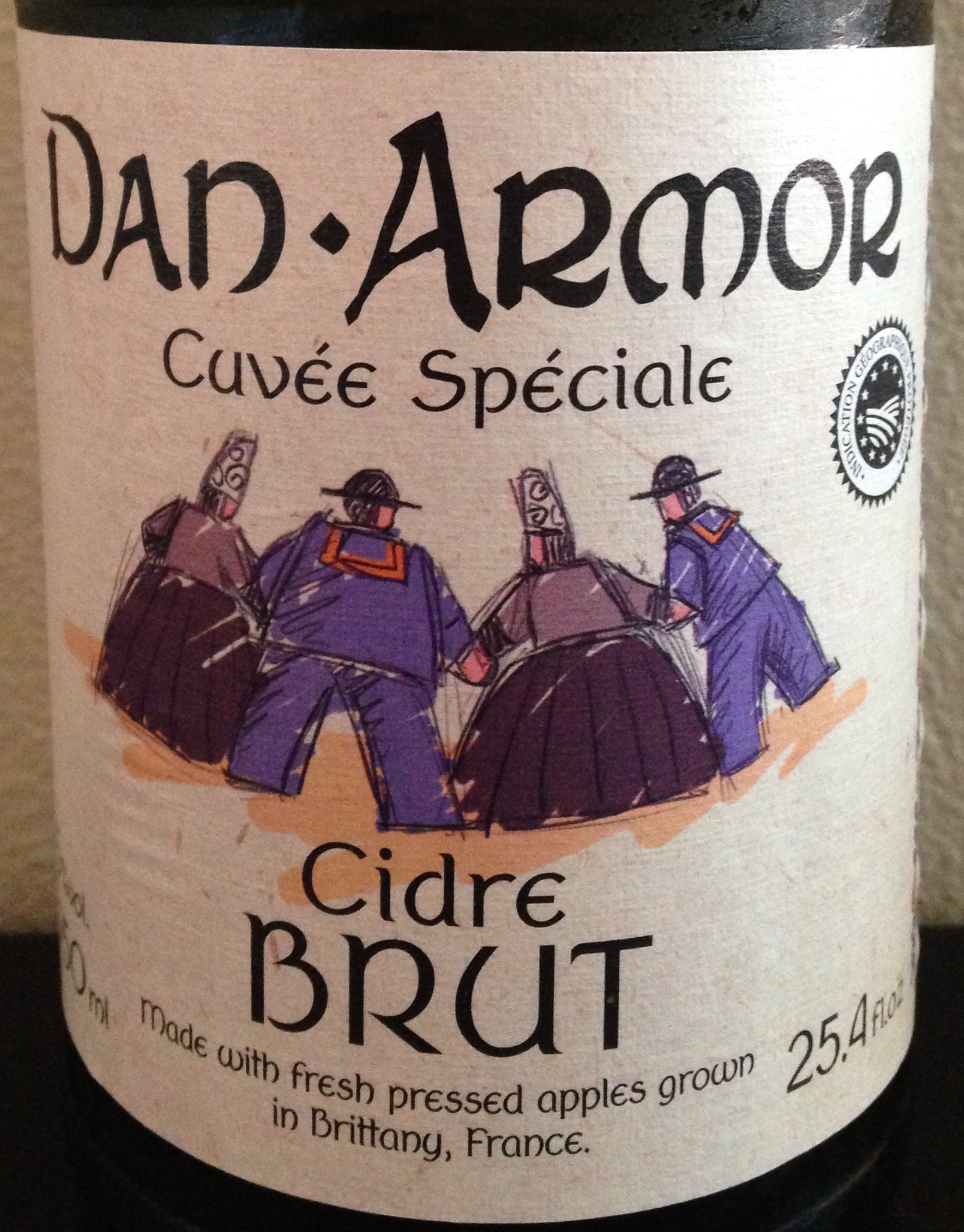
Dan Armor Cuvée Spéciale Cidre Brut

Review of Dan Armor Cuvée Spéciale Cidre Brut, a budget-friendly imported French cider from Trader Joe’s.

2015-08-09 18.00.10

Cider:  Cuvée Spéciale Cidre Brut
Cidery:  Dan Armor
Cidery Location:  Brittany France
ABV:  5.0%
How Supplied:  750ml glass bottle

2015-08-09 18.02.15 2015-08-09 18.02.44

Availability:  wide release at Trader Joe’s (since Dec 2014)

Cider Description:  What Trader Joe’s Vintage Ale is to beer, Dan•Armor Cuvée Spéciale Cidre Brut is to hard cider. Hard cider has been around for centuries, and is currently enjoying a huge upswing in popularity. With all the options available, we found ourselves drawn to the cork-finished ciders made in the Brittany region of France, where a co-op of apple growers has been producing small-batch, hand-crafted cider since 1953. Their apples are grown in Brittany, and the cider definitely has a “local flavor” that makes it unlike any of the other ciders we offer.  Dan•Armor is made with two ingredients – fresh-pressed apple juice and brewing yeast. The cider is bottle fermented (like sparkling wine), which allows the live yeast to develop into fine bubbles – small amounts of CO2 are added to create uniform bubbles throughout each batch. It’s dry and crisp (thus the Brut designation), with forward notes of apples, and strong, persistent bubbles. It’s incredibly drinkable and not at all sweet, a refreshing take on a centuries-old classic.

Price:  $4.99
Where Bought:  Trader Joe’s
Where Drank:  home
How Found:  browsing

2015-08-09 18.01.59

First Impression:  Lovely deep golden orange hue.  Highly carbonated.  Significant head upon pouring which quickly dissipated.  Ripe cooked apple, vanilla, caramel, and brown sugar scent.

Opinion:  Between semi-dry & semi-sweet, which was sweeter than I was expecting, but good.  Effervescent mouthfeel.  The ripe cooked apple, vanilla, caramel, & brown sugar notes continue to the flavor.  Crisp & smooth, and very refreshing,  Light-bodied.  Very flavorful and a bit unique, but not bold.  Slight earthiness, but no funk.  I’m curious what apple varieties they use, but couldn’t find detailed information.  Almost no detectable bitterness, acidity, or tartness.  This cider was a crowd pleaser, and the other three tasters I had all agreed it was good.  It quickly disappeared!  Easy to drink, so its probably good it was only 5% ABV.

Most Similar to:  Other French ciders, although this is a bit sweeter than typical I believe.  French cider seems very similar to English cider.

Closing Notes:   Very tasty!  This is an awesome deal for $5 as well.  I’ll be picking up more for sure.

Have you tried Dan Armor Cuvée Spéciale Cidre Brut?  What did you think?

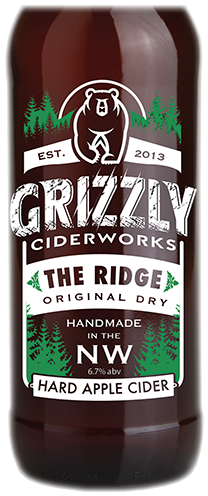
Grizzly Ciderworks The Ridge

Review of The Ridge from Grizzly Ciderworks, their flagship cider.  Grizzly Ciderworks is interesting in that their ciders are very beer-inspired, and many have hops.  The Ridge however does not include hops.

grizzly bottle

Cider:  The Ridge
Cidery:  Grizzly Ciderworks
Cidery Location:  Seattle WA
ABV:  6.7%
How Supplied:  22oz bottles and kegs

Availability:  at least WA, OR, & ID

Cider Description:  The Ridge is Grizzly’s flagship.  Crafted with a special blend of Northwest apples and dry fermented to perfection, The Ridge is rewardlingly tasty.  Simple and refreshing, The Ridge is a cider standard for any occasion.

Cidery Description:  Grizzly Ciderworks was started by Corey Haugen and Andy Petek (in 2013). With backgrounds in marketing, sales, and beverage distribution, these friends created a great fusion of passion and innovation. What started as a hobby in an apartment quickly grew to a garage, then a small warehouse…and then a big warehouse. The rest is history.  After a year of test market draft-only sales in the Puget Sound, Grizzly is now launching retail packages and broadening distribution throughout the Northwest. With a Founder’s Series of four ciders and a rotating Seasonal Series, Grizzly will be available in 22 oz bottles, 1/6 barrel and 1/2 barrel kegs.  In addition to Corey and Andy, the Grizzly family is made up of enthusiastic team members who love everything cider. The company is dedicated to fostering a fun and collaborative atmosphere everywhere from the cidery to your local store or restaurant.

Price:  $5.79 / pint on tap
(retails $7 or $8 / 22oz bottle)

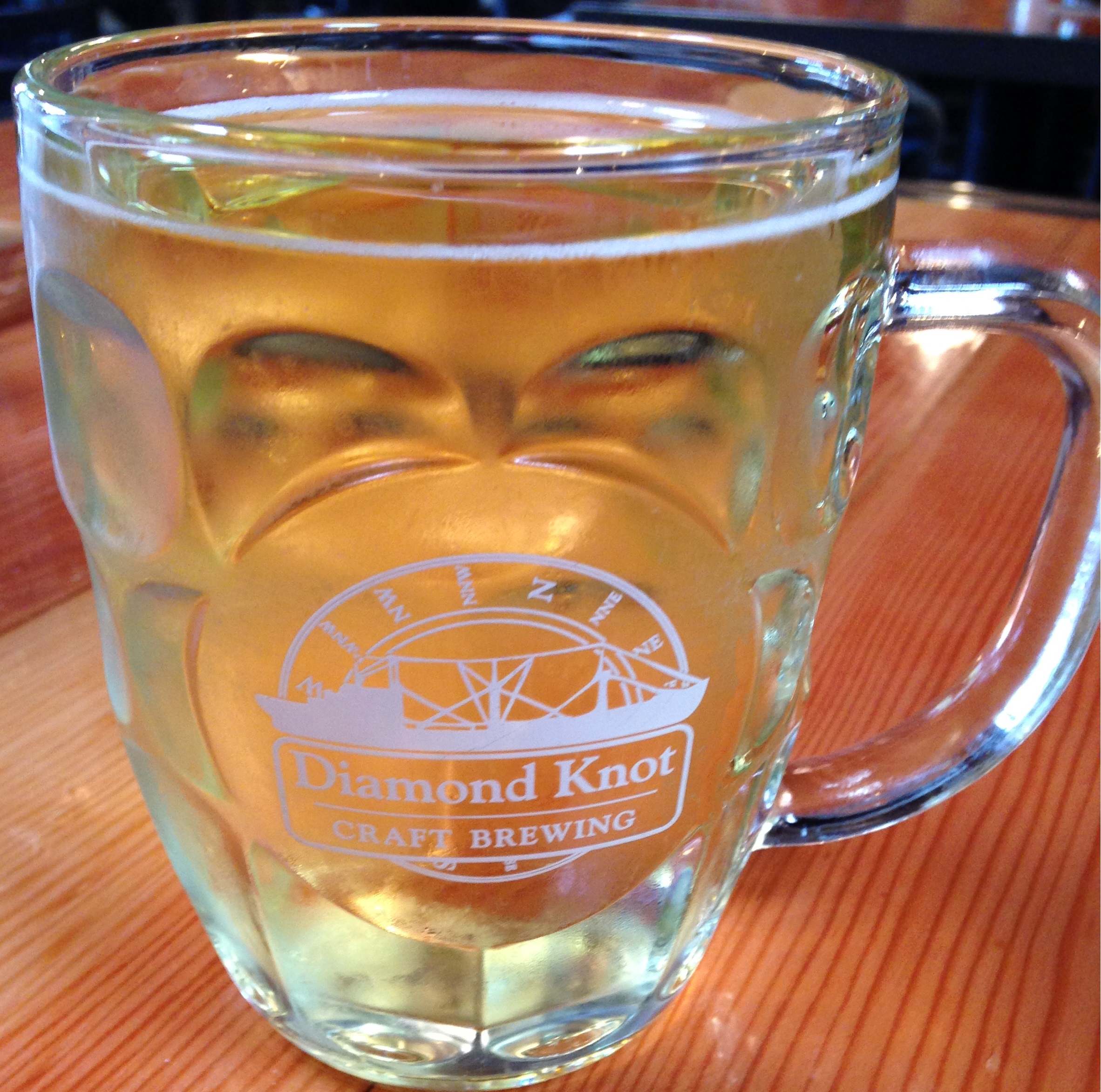
Where Drank:  Diamond Knot Brewpub in Mountlake Terrace WA

How Found:  I called Diamond Knot Brewpub ahead of time to ask their cider selection, as I could only figure out online that they had one tap designated for cider, and didn’t want to be disappointed as I’m a bit picky about my cider!  They only said “Grizzly Cider”, but Untappd was able to tell me it was The Ridge (someone had checked in the night before).  Even the tap list and menu at Diamond Knot Brewpub only said Grizzly Ciderworks, not the variety.  However, I am definite it was The Ridge from the description and its lack of hops or other flavors.

2015-08-15 13.15.20

First Impression:  Light amber hue.  Light carbonation with a light foam ring.  Dry woody apple scent.

Opinion:  Dry to semi dry.  Clean, crisp, and refreshing.  I love the woody earthiness, which is unique for a plain flagship cider.  Moderate bitterness, moderate acidity, and mild tartness.  I was surprised how much I liked this cider considering the dryness and moderate bitterness, which usually put me off a cider, but I think the oaky aspects helped balance that.  This cider tastes barrel aged to me, but it isn’t.  It paired well with my fish & chips (actually tater tots…my favorite aspect of my meal at the Diamond Knot Brewpub).

Most Similar to:  The Ridge has some similar characteristics to Schilling Oak Aged, although The Ridge is more dry, more bitter, and less oaky.  I like the two ciders pretty equivalently.

Closing Notes:   Very solid cider.  I’d try other ciders from Grizzly Ciderworks, but most of their varieties don’t really appeal to me…hopped, ginger, spiced, orange peel & coriander, etc.  I’ll keep an eye on them though!  Currently Grizzly Ciderworks offers four “Founder’s Series” and two “Seasonal Series” ciders.  Here is a great article about their entry into the Seattle cider market in 2013.

Have you tried anything from Grizzly Ciderworks?  What did you think?

Cider Summit Seattle, 218 Ciders Paired Down to a List of 33 I Want to Try

The countdown to Cider Summit Seattle continues!  Last week they released their list of cideries & ciders.  I count 218 ciders.  I spent several hours making a spreadsheet of them, researching, and prioritizing, as unfortunately it will be impossible to try them all (and would be cost-prohibitive at $2 a taste).

I decided to choose ciders that were more expensive, rare, not available here, and of course, likely to be to my tastes.  I ended up with 33, which sounds doable over two days.  I was surprised how many cideries I haven’t had a chance to try anything from.  I also have some second tier options, even after eliminating those I’ve tried before and didn’t sound interesting, but I kinda doubt I’ll get to them!

CSS_2015_Apple

Eden Specialty Ciders:  Heirloom Blend and Sparkling Semi-Dry  (I have never tried their ciders)

Attila Hard Cider Co.:  Rapture  (I have their Scourge of God at home to try)

Neigel Vintners (NV) Cider:  Cherry Perry  (I’ve tried a couple of their perries, and even had an interview with them)

2 Towns CIderhouse:  Bourbon Barrel 2012  (I recently tried their Cider Master Reserve Batch 01 that was barrel aged)

Apple Outlaw:  Oaked Sweet Dark Cherry  (I have never tried their ciders)

Artisinal Imports, Farnum Hill Ciders:  Dooryard and Extra Dry  (I have never tried their ciders)

E.Z. Orchards:  Roman Beauty, Hawk Haus, Semi Dry, and Poire  (I have never tried their ciders)

Dragon’s Head Cider:  Traditional, Manchuian, and Pippin  (I have Wild Fermented at home to try)

Eaglemount Wine and Cider:  Homestead Dry  (their Quince is amazing!)

Finnriver:  Cyser, Country Peach, and Cacao Brandywine  (I have never seen any of these in stores but I’ve tried several of their ciders)

Bull Run Cider:  Pear Wine  (I have never tried their ciders)

Half Pint Ciders, 101 Ciderhouse:  Black Dog Black Cider  (sounds really interesting with activated charcoal; really didn’t like their Cactus Red though)

Liberty Ciderworks:  Macintosh Single Varietal, English Style Cider  (I liked their Manchurian Crabapple and have their Stonewall Dry Fly Barrel Aged at home to try)

Millstone Cellars:  Farmgate Dry  (I want to give them another try after not caring for Cobbler)

Montana CiderWorks:  Darby Pub Cider  (I have never tried their ciders)

Moonlight Meadery:  How do you like them Apples Bourbon Barrel  (I loved their How do you like them Little Apples Bourbon Barrel; note these are ciders with honey, not mead, and are not available in bottles)

J.K.’s Scrumpy:  The Pair Perry  (their Northern Neighbor is pretty good; this one doesn’t appear to be sold in my area yet though)

Sea Cider:  Bittersweet, Bramble Bubbly, and Perry  (their Prohibition is awesome)

Snowdrift Cider Co.:  Perry and Cliffbreaks Blend  (I love their Cornice and Red)

Whitewood Cider Co.:  Kingston Black Whiskey Barrel Aged  (I’ve heard this is good but isn’t out in bottles yet; I wasn’t a fan of their Summer Switchel though)

Has anyone tried any of these ciders?  If you are going to Cider Summit Seattle, what do you plan to try?

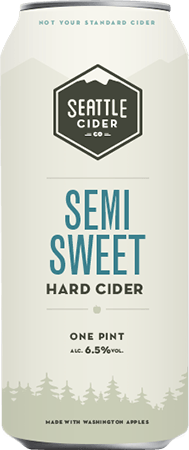
Seattle Cider Semi-Sweet

Review of Seattle Cider’s Semi-Sweet variety, their most popular flagship / year round variety (which also includes Dry, and recently, Citrus).  I’ve had this a few times, but this is the first time since starting Cider Says.  Seattle Cider also offers some seasonal, limited release, and harvest series ciders in 22 oz bottles.

seatle cider can

Cider:  Semi-Sweet
Cidery:  Seattle Cider Company
Cidery Location:  Seattle WA (duh!)
ABV:  6.5%
Brix:  2.6
How Supplied:  16oz cans (four pack), kegs

Availability:  Year round, in WA, OR, CA, HI, TX, MN, WI, & IL

Cider Description:  A light, crisp cider with just a touch of sweetness. Honey in color with notes of bergamot orange, lemon, and apple, this refreshing cider reveals hints of citrus and cinnamon on the palate.  Made from Granny Smith, Fuji, Red Delicious, Golden Delicious, and Gala apples from Eastern Washington.

White wine yeast and pure cane sugar added for fermentation.  Filtered for clarification before tank aging for at least two weeks.  Fermented dry.  Some cane sugar is added to back sweeten.

Cidery Description:  Seattle Cider Company is Seattle’s first cidery since Prohibition, bringing true craft cider back to Seattle and across the country. Bridging the gap between wine and beer with flavorful, small-batch cider, Seattle Cider’s initial offerings – Dry and Semi-Sweet – break the mold of overly sweet cider, bringing the natural flavors of Washington apples to the forefront.

My pint came from this keg:
(visible through the window at the restaurant)

2015-08-10 18.36.09

Where Drank:  Hop Jacks, a bar/restaurant (“neighborhood gathering place”) in Lynnwood WA
Price:
  $4.25 / pint (Happy Hour)
How Found:  I’ve known about Seattle Cider pretty much since they started up in 2013.  They built a very quick following, and seems to be the most commonly found craft cider on tap around here, plus can be located almost everywhere that sells bottled/canned cider.  Seattle Cider is currently the only cider on tap at Hop Jacks (they also offer bottles of Angry Orchard).

2015-08-10 17.54.31

First Impression:  Medium amber, and actually has some head to it, even after the trip from the bar to our table.  I don’t pick up any distinctive smell besides mild apple.  Interestingly enough there are several reviewers who say this cider smells bad?  I’ve definitely smelled worse ciders….

Opinion:  More semi-dry than semi-sweet to me.  Crisp apple flavor.  I don’t really pick up any other notes, such as the citrus or cinnamon they mention.  A bit tart & bitter on the finish, but quick.  Uncomplicated but refreshing.  I also find it better on tap than canned.  I like it better when very cold.  There is little carbonation in the mouth.  I had this cider with fish & chips, which is a great combination as this is a simple cider which isn’t sweet and won’t compete with the meal.

Most Similar to:  Anthem’s original cider, which is slightly more tart & complex

Closing Notes:   This is a very basic cider which is definitely drinkable (and easy to drink), but not something I’d typically buy when given a large selection.  Its better than Angry Orchard though, and a good deal at $4.25 / pint Happy Hour prices.

Their Ciders:  I’ve tried a few other selections from Seattle Cider and haven’t really been impressed with any of them, plus they generally tend to be a bit drier than I prefer.  They have a Berry cider for example which I barely picked up any berry flavor and was pretty dry for a fruity cider, 1.8 compared to 2.6 Brix for this one.  I like that they publish Brix, if only to compare the sweetness levels of their varieties to each other.

Have you tried Seattle Cider?  What did you think?

Cider Summit Seattle Announces Cideries & Ciders

Two weeks until Cider Summit Seattle–I’m so excited!  The full list of cideries and the ciders they will be pouring is now available!!  Stay tuned for lots of Cider Summit related posts, as I’ll be covering the event both days, tasting as many ciders as possible.

The following is the updated press release info (thanks Alan Shapiro from SBS Import Brands).

css_header

What:  6th annual festival. 200+ ciders expected from 57 producers. Ciders from 8 states and 6 countries. 102 from WA, 37 from OR. At least 90 ciders never previously poured at event.

When:

  • Friday 09/11 from 3-8pm (VIP ticket session starts at 2pm)
  • Saturday 09/12 from noon-6pm

Where:  South Lake Union Discovery Center Lawn (101 Westlake Ave North)

Cost:  $30 if purchased in advance online or at sponsors & local bottle shops. Admission includes a souvenir tasting glass and 8 tasting tickets.

Additional tasting tickets available onsite for $2 each.

VIP ticket is $40, available online only. Includes glass and 12 tasting tickets along with 2pm admission on Friday. Limited quantity available.

Designated driver tickets available for $5 and includes a bottle of water. May be purchased at the gate only.

All tickets allow re-admission Fri/Sat with wristband and glass.

Food:  Specially paired foods available for purchase from Whole Foods Market, Capitol Cider and three twins ice cream. Additional snack vendors planned.

Music:  Live music on both Friday & Saturday on the Jim Miller Festival Stage.

Sponsors:  Presented by Whole Foods Market. Supporting sponsors include Capitol Cider, Oregon Fruit Products Company, Umpqua Bank, Hood River Juice Company, ILY Pet, Click Wholesale and media sponsors CIDERCRAFT Magazine, KEXP, and The Stranger.

Other:

  • The Oregon Fruit Products Fruit Cider Challenge. 17 ciders made exclusively for Cider Summit with consumer voting.
  • Cider cocktails created by Capitol Cider & Eden Ice Cider Company.
  • The ILY Pet/Seattle Humane Dog Lounge. Dogs of all ages are welcome.
  • Event store featuring bottles-to-go, wearables, cider books, & more.
  • THIS EVENT IS STRICTLY 21 & OVER.

Beneficiaries:

  • Institute for Myeloma & Bone Cancer Research
  • Northwest Cider Association
  • Seattle Humane

Tickets and Info:

Book Review #1, The New Cider Maker’s Handbook

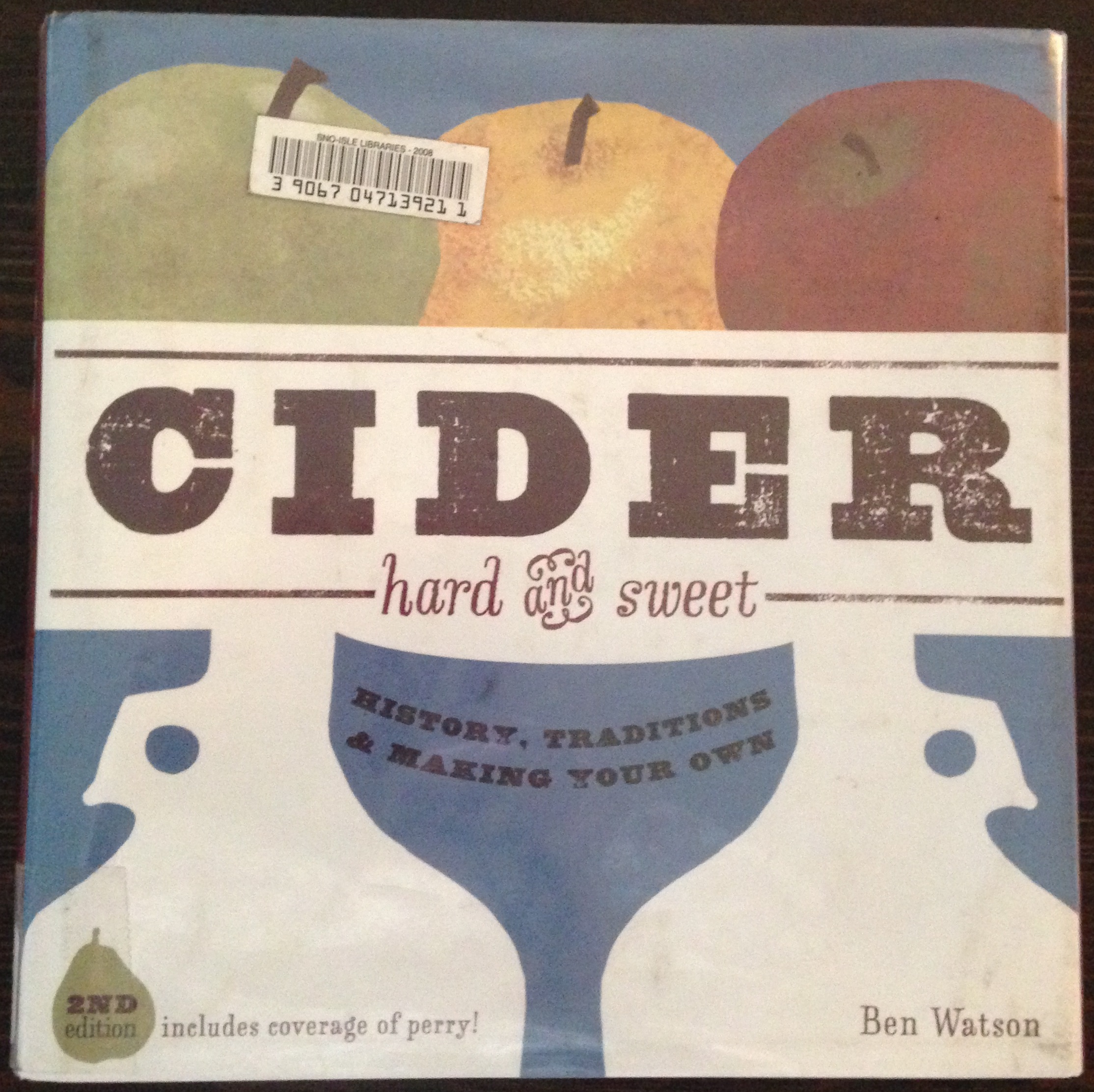
I picked up The New Cider Maker’s Handbook, A Comprehensive Guide for Craft Producers (Claude Jolicoeur, 2013 edition) from my local library.  Hardcover priced at $26.19 on Amazon.  I also found a few other cider-related books, and placed a hold on all four books they had available on hard cider in the network.  So, this is part one of at least four on cider-related books.  I’m a huge fan of libraries, especially in this case to preview books to determine which I may want to purchase.

Fun fact – I worked at my library in college for all four years!  Note that libraries can typically obtain books from any library in their network.  It they don’t have what you want, if you ask, they may use the interlibrary loan system to obtain it through the mail, or purchase it for the library.
I only read what I found interesting, as I’m honestly not interested in cidermaking.  I care more about what pertains to my enjoyment of cider and advancement of my knowledge about it.  This is definitely a handbook (lots of text and few photos), and has a cidermaking focus, so there may not be much added value for the non-cidermaker.  I nonetheless enjoyed flipping through it and finding the bits which were of interest to me.

new cider maker's handbook

Chapters:

Part I, Basics of Cidermaking
Materials and Supplies
The Raw Material: Apple Juice
Cider Preparation

Part II, Growing Apples for Cider
The Cider Orchard
The Varietal Selection

Part III, Juice Extraction
Apple Mills
Apple Presses

Part IV, The Apple Juice or Must
(note that “must” is a winemaker’s term for unfermented, sweet juice, akin to “wort” in brewing)
The Sugars
The Acids
The Tannins or Phenolic Substances
The Nitrogenous Substances
The Pectic Substances

Part V, Fermentation and Beyond
Blending
The Fermentation Process
Cider Diversity
Cider Troubles and How to Avoid Them

Appendix 1, Units and Measures

Appendix 2, Companion Materials

What I Found Interesting:

I especially liked the chapter on Apple Varieties in Part II, and all of Part IV (which was almost 50 pages, mostly composed of the chapter on sugars, with focus on measuring & calculations).

Notes on Apple Varieties

  • True cider orchards are mostly found in Europe (France, England, and Spain).
  • North American orchards mainly contain dessert apples, which don’t have as much body and mouthfeel that is obtained with cider apples with more tannins.
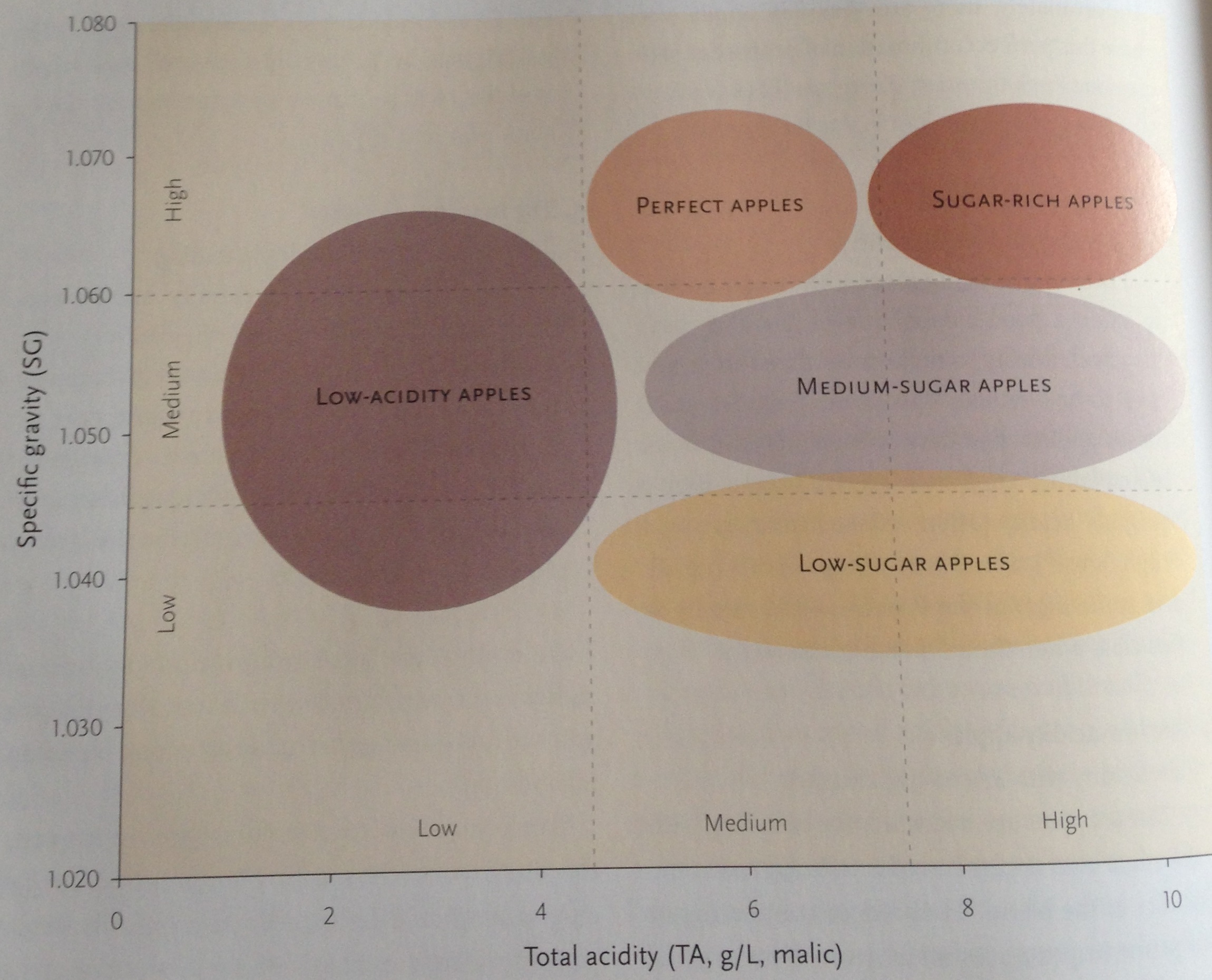
  • The “perfect” cider apple would have high sugar, medium acidity, and medium tannins.  There are not many of these, but Kingston Black, a famous English variety, would be an example.
  • Cider apples should have at least one of these features:  high sugar to produce alcohol, moderate or low acidity to balance blend, and some tannin to give body & mouthfeel.

Notes on Sugars

  • High sugar level in juice translates into high alcohol content after fermentation.
  • The Brix scale for residual sugar content in a liquid (sweetness) is primarily used in North America.
  • Apples with most sugar often have the most flavor, and produce a richer cider.
    • Fructose (levulose or fruit sugar) is the most abundant, 7-11% by mass.  It is a simple & reducing sugar, thus easier to transform to alcohol.
      • Simple = does not hydrolyse (break down) to give other sugars
      • Reducing = capacity to interact chemically with other compounds
    • Glucose (dextrose or grape sugar), 1-3% by mass, is also simple & reducing.  Its concentration decreases as an apple ripens.
    • Sucrose (saccharose or cane sugar) 2-5% by mass, is a double sugar (di-saccharide) and nonreducing.  However, it may be inverted, particularly by yeasts.
      • Inversion = chemical reaction where sucrose combines with a bit of water to give equal amounts glucose & fructose
    • There are also very low concentrations of other fermentable sugars, such as sorbitol.
      • Apple juice also contains very small amount of sorbitol (0.2-1%).
      • Pear juice has more sorbitol (up to 2%).
      • Sorbitol has a sweetening effect but technically isn’t a sugar, but a polyol (sugar alcohol)
      • Sorbitol is why dry perry is never as dry as a bone-dry cider.

A Chart on Specific Gravity, Acidity, & Apple Varieties

cider maker's handbook chart

Sheppy’s Oak Matured Somerset Cider Vintage Reserve 2013

Review of Sheppy’s Oak Matured Somerset Cider Vintage Reserve 2013.  I had been on the lookout for a cider with a bold barrel influence, and this one matches that description!

2015-08-14 17.21.08 - Copy

Cider:  Oak Matured Somerset Cider, Vintage Reserve 2013
Cidery:  Sheppy’s
Cidery Location: Somerset, Taunton, UK
ABV:  6.9%
How Supplied:  500ml brown glass bottle

2015-08-14 17.21.39 2015-08-14 17.22.04

Availability:  Wide release in UK, but likely limited in the U.S.

Cider Description:  Vintage Reserve is a fine traditional English cider from the Sheppy family cidermakers.  This quality sparkling cider is crafted from apples from a single year’s harvest grown in the Sheppy orchards in Somerset, England.

Cidery Description:  Farming 320 acres at Three Bridges Farm since 1917, three generations of the Sheppy family have weathered the ups and downs of farming and cidermaking by embracing change and opportunity.  Craftsmen cidermakers for over 200 years.  Quality is central to all our ciders, which are produced from local and home-grown apples here at Three Bridges Farm. Modern technology has been used to assist the completely traditional production of fine English cider, but never to compromise the quality which is associated with the name Sheppy’s Cider.  We are proud to share with visitors from far and wide our beautiful farm and orchards, and to show you as much as possible of how and where we make our delicious ciders.

2015-08-14 17.21.47

Price:  $7.00 / 500ml bottle
Where Bought:  Full Throttle Bottles in Georgetown neighborhood of Seattle WA
Where Drank:  home
How Found:  browsing, remembering a recommendation from Sarah of Cider Log

2015-08-14 17.21.08

First Impression:  Golden amber.  Little carbonation.  Distinct rick oak apple scent.

Opinion:  Semi-dry.  Wow, this is actually heavily oak aged!  I had been on the lookout for a cider I could say that about, and found it.  For me, it is a favorable heavy oak flavor.  I also pick up caramel, burnt sugar, and vanilla.  My only complaint is the moderate bitterness with the medium-length finish.  However, once it warmed up a bit from fridge temperature, it became less bitter and the flavor smoothed out a bit.

So, I’d recommend between fridge and room temperature with this cider.  At room temperature it got a bit funky.  I find it odd this was described as sparkling cider when I found little carbonation, but maybe they meant not still?  It was also a relatively non-descriptive description on the bottle, which didn’t do this cider justice.  I like that they vintage this cider, as I’d imagine the cider crop can vary significantly year to year, which can definitely impact the flavor, so this way consumers know they may be getting a slightly different product than they had previously.  This is a thick, rich, earthy, and smokey cider with a strong oak barrel flavor.

Most Similar to:  English ciders, but with a more rich & heavy oak flavor.  If you want something sweeter with a less intense but still bold flavor, I’d recommend Thistly Cross Whisky Cask.

Closing Notes:   Yum!  I started off questioning whether I liked this cider, but it really grew on me, and I was sad when the bottle was empty.  For an imported craft cider this seemed to be a good deal at $7.  Full Throttle Bottles is the only shop I’ve seen Sheppy’s at so far, and they had one other variety when I bought this one (Somerset Draught Cider I believe).

Have you tried Sheppy’s Oak Matured cider?  What did you think?

Do you have any other recommendations for me for ciders with a heavy barrel influence?

Square Mile The Original Hard Apple Cider

Review of Square Mile Cider Company’s “The Original Hard Apple Cider”.  I tried this a couple years ago and remember after two sips thinking I got a bad bottle (re-fermented?), and pouring it down the drain.  They did have a re-fermenting recall in 2013, but apparently only 22oz bottles, not 12oz.  After seeing singles on sale, I decided to give it another try.  On the same day as I bought it, the checker at the store said she thought it was pretty good, as did a blog reader.  Will I like it better this time around?

IMG_0289

Cider:  The Original Hard Apple Cider
Cidery: Square Mile Cider Co.
Cidery Location: Portland OR
ABV:  6.7%
How Supplied: 12oz (or 22oz) glass bottles

IMG_0284 IMG_0287

Availability:  WA, OR, CA, HI, AK, NV, AZ, TX, MT, ID, MI, & CO

Cider Description:  The Original is a classic American hard cider.  Our cider is made from three apple varieties rooted in American culture – Red Delicious, Yellow Delicious and Jonagolds – picked and pressed by hand in Oregon.  We chose a lager beer yeast for fermentation to create a cider that perfectly balances sweet and tart with a light, crisp apple flavor and a clean, refreshing finish.  The Original is best over ice to complement the cool, crisp apple flavor.

IMG_0286 IMG_0285

Cidery Description: Inspired by the pioneering spirit of those who traveled the Oregon Trail in the pursuit of a dream, we offer Square Mile Hard Cider.  We set out to reinvigorate an enduringly classic American beverage with a blend of apples hand-selected for the perfect balance of sweet and tart.  Our hard cider pays homage to the fortitude and perseverance of the original pioneers.

Price:  $1.49 for a single bottle (a six pack runs about $8)
Where Bought:  Whole Foods, although I’ve also seen it at Fred Meyer & Total Wine
Where Drank:  home
How Found:  Browsing.  And, browsing again.  I gotta stop doing that, as I keep buying cider!

IMG_0283

First Impression: Moderate carbonation.  Clear yellow amber.  Smells of sweet apples with a hint of honey.

Opinion:  Semi dry.  My nose deceived me!  To me this cider has a bitter & acidic appley bite, not a sweet apple-honey flavor.  I pick up a hint of pear.  It is very beer-like, especially to start.  I find the finish on the longer side, drawing out the bitterness.  Its interesting it isn’t more sweet, as they use both pear & apple concentrates.  Unfortunately I am quite sensitive to bitterness and found it overwhelming to my palate, and wasn’t able to perceive any other discernible flavors.  Interestingly I wouldn’t describe this cider as very tart, although the bitterness again may have been overwhelming my palate.  Everyone has different tastes, so just because I didn’t like it doesn’t mean you won’t (and it appears Square Mile has plenty of fans).  Also, note that I definitely didn’t drink this over ice…although I’m not a cider traditionalist, that is something I haven’t ever felt a need to try!

Most Similar to:  Kölsch beer (per my hubby).  He rather liked this cider.

Recommended For:  The beer fan who is interested in getting into ciders but doesn’t want to stray too far or have an overly sweet cider.

Closing Notes:   Square Mile was started in 2013 by the Craft Brew Alliance (who also owns Redhook).  So, unfortunately its just another cider by “Big Beer”.  They also offer “Spur & Vine” (hopped cider, 12 & 22oz bottles), and over the holidays they offered “Cranberry Hard Cider” (750ml bottle special release).  This reviewer liked their hopped cider even though they don’t like beer!  Apparently though they have recently switched to a sweeter version for both their ciders, and started using concentrates when they didn’t before? (check out the comments on their Facebook page which unfortunately they didn’t respond to)

Have you tried Square Mile The Original Hard Apple Cider?  What did you think?